
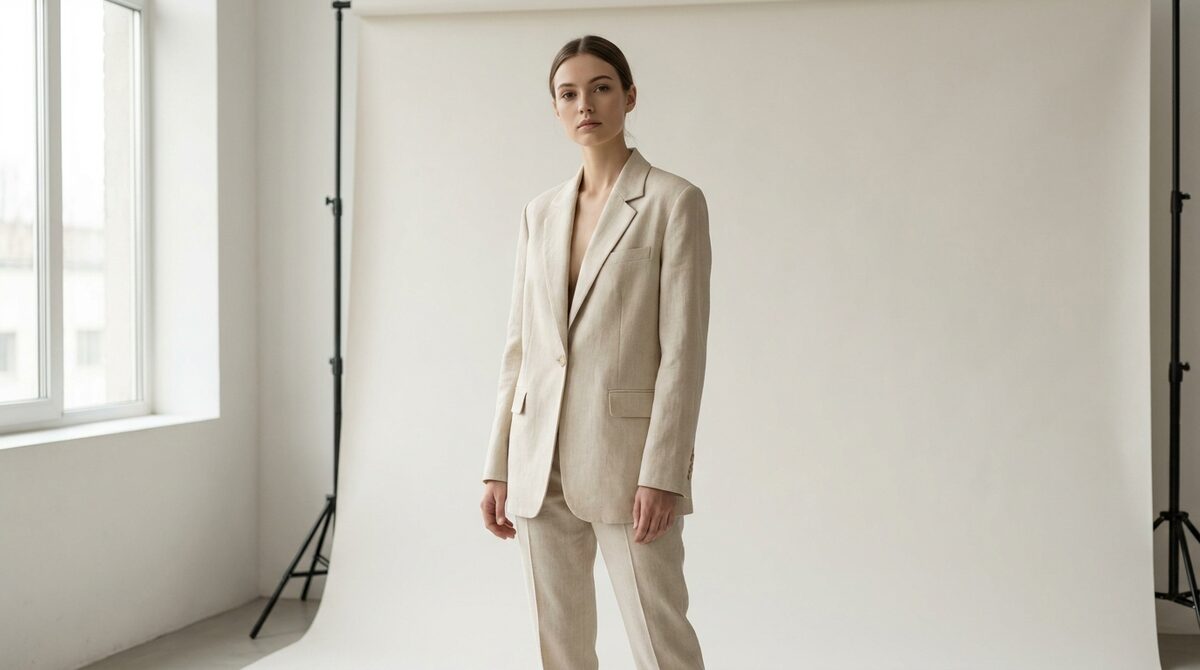
AI generated female models let brands show womenswear on diverse, realistic figures without a shoot, straight from existing photos. 1Match then powers conversion: a virtual try-on that renders garments on each shopper's own body, captures first-party leads, feeds funnel analytics, and keeps every upload zero-storage and GDPR-safe.
What AI generated female models offer brands
AI generated female models let a brand present womenswear on photorealistic figures without booking a shoot. You upload a product photo and the tool renders it on a synthetic model, with control over pose, age, build, skin tone and setting. Because it works from your existing product photos, there is no reshoot and no 3D pipeline.
The standout benefit is representation at scale: showing the same piece on several body types without multiple castings, so more of your audience sees someone like them wearing it.
How the technology renders a model
The system segments your garment, learns its texture and silhouette, and synthesizes a female figure around it while re-projecting the fabric onto the new pose. With strong image quality, seams, prints and color stay true; weaker tools warp patterns and text. The same garment-mapping idea powers on-body try-on, which we explain in how an AI clothes changer works.
The ethics you should not skip
Use fully synthetic, non-identifiable faces so you are not reproducing a real person's likeness without consent. Beyond legality, there is a representation responsibility: it is easy to default to a single idealized body, so deliberately generate a realistic range of shapes, ages and skin tones. Done thoughtfully, AI imagery can widen representation rather than narrow it.
Tools to consider
1. Botika
Pros: Fast female on-model renders, good background variety.
Cons: Occasional detail artifacts on complex prints.
Verdict: Good for quick, small-catalog work.
2. FASHN
Pros: High fidelity, API for bulk generation.
Cons: Technical setup.
Verdict: Best for volume with dev support.
3. 1Match
Pros: On-body try-on for each real shopper, 10-minute setup, native lead capture, funnel analytics, zero-storage GDPR-safe photos.
Cons: Storefront-conversion focus rather than editorial art direction.
Verdict: The conversion layer to add on top of generated imagery.
Why the shopper's own body matters most
An AI generated female model is still not the customer, and womenswear returns are dominated by fit and size. Representation in the catalog helps a shopper start imagining the garment; seeing it on her own body finishes the job. That leap from aspiration to confidence is what a virtual fitting room delivers.
A workflow that keeps imagery on-brand
Standardize the pipeline: clean, well-lit source photos, a defined range of body types and skin tones, two or three poses per garment, and a quick artifact review focused on hands, hair edges and prints. Keep your originals as the color reference so a render never drifts off the true fabric shade.
Bake representation into that standard rather than leaving it to chance. Deliberately generate a realistic spread of shapes and ages so the catalog reflects your actual audience. Handled this way, AI female models widen who feels welcome in your store, and an on-body try-on then lets each of those shoppers confirm the fit for herself.
Turning representation into conversion
Representation in imagery is a strong first step, but it plateaus at the catalog. A shopper who sees a model close to her build starts to imagine the garment on herself; she still cannot confirm it. The gap between imagine and confirm is exactly where fit-driven returns and abandoned carts live, and no amount of catalog diversity closes it on its own.
On-body try-on closes it directly. When a shopper renders the dress on her own body, hands and face included, the abstract promise of representation becomes a concrete, personal preview. That is the moment hesitation converts to purchase, and it is why diverse AI imagery and virtual try-on are complements, not alternatives.
From imagery to a Shopify growth engine
Use AI generated female models to build a diverse, polished catalog quickly, then let 1Match convert the visitors it attracts. As a virtual try-on Shopify app, it shows garments on each shopper's own body from your existing photos, captures first-party leads, powers funnel analytics, and keeps every uploaded photo zero-storage and GDPR-safe. Fashion-first, no reshoot, live in about ten minutes, it lifts add-to-cart 18-28% and cuts returns 25-40%. Install 1Match to turn representative imagery into a real growth engine.
Frequently asked questions
How realistic are AI generated female models?
Today's tools produce highly photorealistic female figures with natural skin, hair and pose detail. The quality bar is garment accuracy, whether the tool keeps fabric drape, print placement and color faithful to your original product photo.
Is it ethical to use AI generated female models?
It is, provided the models are fully synthetic and not built from a real person's likeness without consent. Using composite, non-identifiable faces avoids exploiting real individuals, and brands should still represent diverse, realistic body types rather than a single idealized look.
Can I show the same garment on different body types?
Yes, and that is a major advantage. You can render one dress on multiple builds, ages and skin tones without booking several models, helping more of your audience picture themselves in the product.
Do AI female models reduce returns?
Catalog imagery has limited effect on fit. The larger returns reduction comes from letting each shopper see the item on her own body with virtual try-on, which addresses the fit and size doubts behind most apparel returns.
 Install on Shopify