
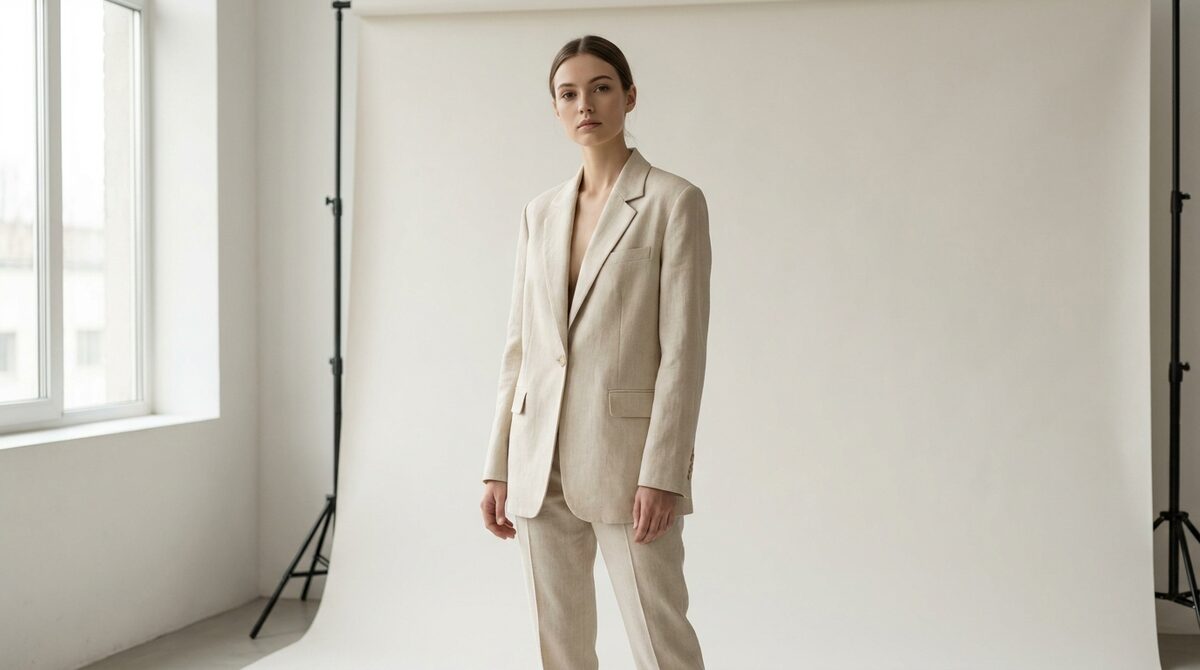
An AI generated male model puts menswear on realistic figures in minutes from your existing photos, with no reshoot or 3D. 1Match then converts that catalog into revenue: a virtual try-on that renders garments on the shopper's own body, powers first-party lead capture and funnel analytics, and stores no photos at all.
The rise of the AI generated male model
For years menswear photography meant booking a model, a studio and a half-day crew for every drop. An ai generated male model collapses that into a few minutes: upload your flat or mannequin shot and receive a photorealistic figure wearing the piece. Because the render is built from your existing product photos, there is no reshoot and no 3D pipeline to maintain.
Menswear is a strong fit for this because the garments, tailored shirts, jackets, tees, chinos, tend to have clean lines that AI reproduces faithfully when the tool has strong image quality.
Where an AI generated male model wins
Speed and cost are the headline benefits, but the quiet advantage is variety. You can present the same coat on a slim, athletic and broader build without three separate castings, which helps more of your audience picture themselves in the product. You can also localize imagery by swapping backgrounds and model looks per market.
That flexibility makes AI catalog imagery a natural companion to a broader virtual try-on strategy rather than a replacement for it.
The limits you should plan around
Even the best male model generator has failure modes: hands, watch straps, layered collars and dense text prints are where artifacts creep in. Always review generated frames before publishing, and keep your original garment photo as the source of truth for color.
More importantly, a synthetic model is aspirational, not personal. He is not your customer, and menswear returns are dominated by fit and size doubt. Pretty imagery does not resolve that doubt on its own.
Closing the fit gap with try-on
This is the difference between imagery that looks good and imagery that sells. A virtual fitting room lets a shopper see the exact shirt on his own body, hands and even accessories like glasses or a watch, before buying. Where an AI generated male model shows the garment on a stranger, a try-on shows it on the buyer.
Tools worth comparing
1. Botika
Pros: Quick male on-model renders, good background library.
Cons: Occasional hand and layering artifacts.
Verdict: Handy for fast catalog refreshes.
2. FASHN
Pros: High fidelity, bulk-friendly API.
Cons: Needs technical setup.
Verdict: Good for high-volume menswear catalogs.
3. 1Match
Pros: Real on-body virtual try-on, 10-minute setup, native lead capture, funnel analytics, zero-storage GDPR-safe photos.
Cons: Storefront try-on focus rather than pure art-directed lookbooks.
Verdict: The conversion-first option for Shopify menswear stores.
Practical workflow for menswear teams
Start with steamed, well-lit garment shots on a neutral background, then generate two or three poses per piece: a straight front for prints and logos, a three-quarter for silhouette, and a seated or walking frame for context. Review collars, cuffs, plackets and any watch or accessory area, since those are the usual weak points. A tidy pipeline gets a full menswear drop on-model in an afternoon.
Keep your originals as the color reference and lock a house style, model build range, background palette, framing, so the catalog stays consistent even as volume grows. Consistency is where AI quietly beats ad hoc shoots that vary shoot-to-shoot.
What shoppers actually respond to
Menswear buyers scan fast and decide on fit signals: how a jacket sits at the shoulder, how a shirt breaks at the waist, how a shoe pairs with a trouser length. An AI generated male model can stage those signals convincingly, but only for a generic body. The moment a shopper can swap the model for himself, hesitation drops, because he is no longer translating from someone else's proportions to his own.
That psychological shift, from admiring to owning, is why the highest-performing menswear pages combine aspirational model imagery at the top with a personal try-on right beside the add-to-cart button. One sells the look; the other removes the risk. Together they lift add-to-cart and cut the fit-driven returns that eat menswear margins.
From catalog art to a Shopify growth engine
Use an AI generated male model to keep your menswear catalog fresh and cheap, then let 1Match convert that traffic. It is a virtual try-on Shopify app that shows every garment on the shopper's own body from your existing photos, captures first-party leads, powers funnel analytics, and stores no shopper photos at all. Fashion-first, no reshoot, up and running in about ten minutes, it turns your imagery into a measurable growth engine that lifts add-to-cart 18-28% and cuts returns 25-40%. Install 1Match to pair AI catalog speed with real on-body confidence.
Frequently asked questions
Can AI generate realistic male models for menswear?
Yes. Modern generators produce photorealistic male figures with believable proportions, facial detail and pose variety. The key quality marker is whether the tool keeps your garment's fabric, fit and print accurate rather than distorting collars, plackets or logos.
Is it cheaper than hiring a male model?
Significantly. A traditional menswear shoot with a model, studio and crew can run into thousands; an ai generated male model costs a few dollars per image or a flat subscription. The savings compound if you refresh catalog imagery often.
Can I control body type and ethnicity of the AI model?
Most tools let you choose age range, build, skin tone and pose so your imagery reflects your target customer. This makes it easy to show the same jacket on several body types without booking multiple models.
Will AI male models help reduce returns?
Catalog imagery alone has limited impact on fit. The bigger returns reduction comes from letting the shopper try the garment on their own body with a virtual try-on, which addresses the fit and size doubts behind most menswear returns.
 Install on Shopify