
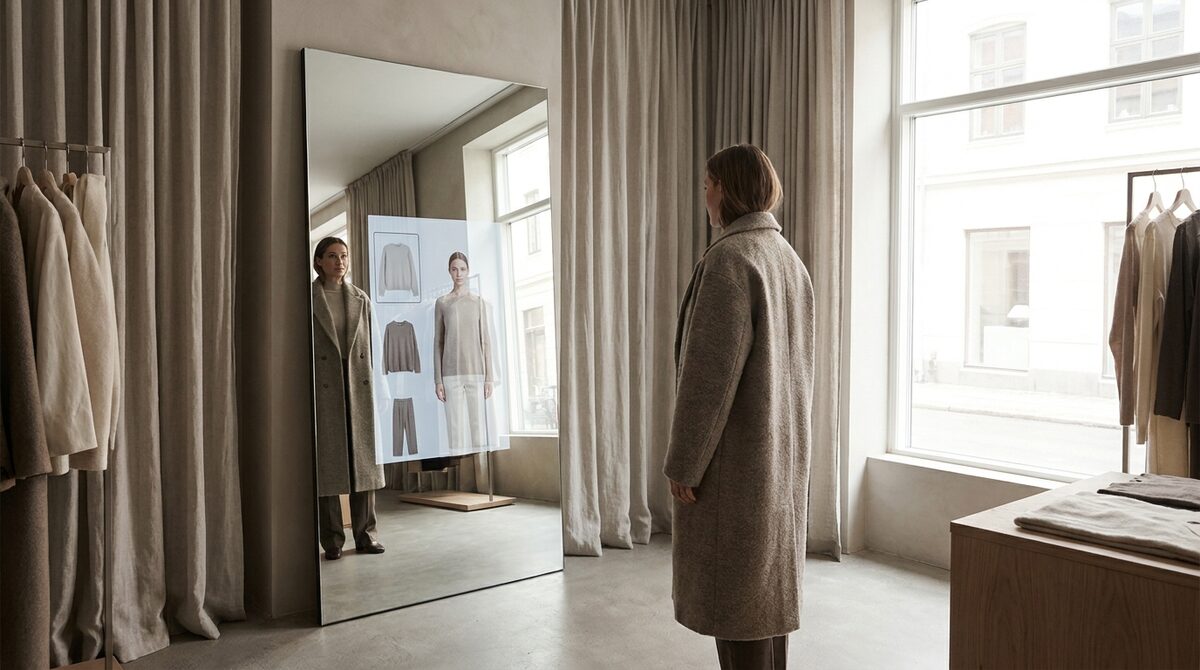
Fitting AI is the technology that renders a real garment onto a shopper's own photo so they can see the fit before buying. On Shopify it turns that preview into a growth engine: it converts hesitant browsers, captures first-party leads, powers funnel analytics, and keeps every shopper image zero-storage and GDPR-safe.
What fitting AI means in plain terms
Strip away the jargon and fitting AI answers one question a product photo cannot: how will this look on me? It uses computer vision to understand a garment and a body, then composites them into a realistic image. There is no 3D scan and no reshoot, the AI works from photos you already have. Merchants comparing vendors usually end up in our roundup of try-on platforms, which lists what each one costs to run.
We unpack the mechanics in how an AI clothes changer works, which pairs neatly with this overview.
Where fitting AI beats a static photo
A flat product image shows the garment on nobody, or on a model who looks nothing like the shopper. Fitting AI personalises the preview to the individual, which is what actually builds purchase confidence. That confidence is measurable: stores adopting try-on see 25 to 40% fewer apparel returns and 18 to 28% more add-to-cart events.
Fitting AI is not just for clothes
The strongest fitting AI covers hands, face and body. That means a jewellery store can preview a ring on a real hand, an optician can place glasses on a real face, and a hat brand can show headwear that actually sits right. Fashion-first does not have to mean clothing-only.
Choosing a fitting AI tool
Here is how the common options stack up on the criteria that matter.
| Criterion | Why it matters | 1Match |
|---|---|---|
| Setup time | Time to live value | ~10 minutes |
| Source | Effort to launch | Existing product photos |
| Categories | Range of catalogue covered | Hands, face and body |
| Data | Legal and trust risk | Zero-storage, GDPR-safe |
For a broader comparison, browse the best virtual try-on apps for Shopify in 2026.
Fitting AI and the returns problem
Returns quietly eat fashion margins, and fit is the main culprit. Because fitting AI attacks fit uncertainty at the exact moment of decision, it is one of the most direct return-reduction levers available. We cover the tactics in how to reduce returns for an online fashion store.
On Shopify, fitting AI is most valuable when the preview also earns its keep as a growth engine: 1Match combines photorealistic try-on with native lead capture, funnel analytics and zero-storage GDPR-safe processing, live in about ten minutes with no 3D and no reshoot.
Frequently asked questions
What is fitting AI?
Fitting AI is artificial intelligence that shows how a garment will look and fit on a specific person from a photo. It reads the clothing from a product image and the body from a shopper's uploaded photo, then renders the two together photorealistically, no 3D avatar required.
Is fitting AI accurate?
Good fitting AI is very accurate for drape, length and proportion because it renders the actual garment on the actual person. Since roughly 70% of apparel returns are fit and size related, seeing a realistic preview removes most of the uncertainty that drives returns.
Can fitting AI handle accessories, not just clothes?
Yes. Advanced fitting AI works across hands, face and body, so it can preview rings, glasses and hats as well as jackets and dresses. This makes it useful for accessory and eyewear stores, not only apparel.
Does fitting AI store shopper photos?
It depends on the vendor. A well-designed system such as 1Match is zero-storage and GDPR-safe, processing the photo for the try-on and discarding it. Always confirm the data policy before enabling any fitting AI on your store.
 Install on Shopify