
Short answer: a Shopify product reviews app collects star ratings, written feedback and — crucially — customer photos, then displays them on your product pages as social proof. The three worth shortlisting: Judge.me (best all-round, free plan, fast), Loox (the photo-review specialist, ideal for fashion), and Okendo (filterable attributes like fit and size for DTC brands). Shopify no longer ships a native reviews app, so one of these is doing the job.
You can write the most honest product description on the internet and it will still lose to three sentences and a phone photo from a customer named Sarah. That's not a flaw in your copy — it's how trust works online. Shoppers discount what the seller says and believe what other buyers show. A reviews app is how you put Sarah's photo on the page.
For fashion it's not a nice-to-have. The single biggest reason a clothing sale doesn't happen is uncertainty about fit and look, and the single most reassuring thing on the page is a photo of the item on someone who already bought it. Here's how review apps work and the three that earn their place.
What a Shopify product reviews app actually does
Beyond showing stars, a good review app does four jobs:
- Collects reviews automatically. After delivery, it emails the customer asking for a rating — with a one-tap flow and an incentive (a discount for a photo) to lift response rates.
- Captures photos and video. User-generated imagery is the highest-converting element, and the best apps actively push customers to upload it rather than just allowing it.
- Displays social proof everywhere. Product-page widgets, star ratings in collections, homepage carousels, and rich-snippet stars in Google results that lift click-through.
- Feeds the rest of your stack. Reviews syndicate to Google Shopping, flow into email, and — increasingly — become the content AI shopping assistants read when they summarise a product.
The three apps below all do this. They differ in what they optimise for.
The 3 best Shopify product reviews apps
1. Judge.me — the best all-round choice
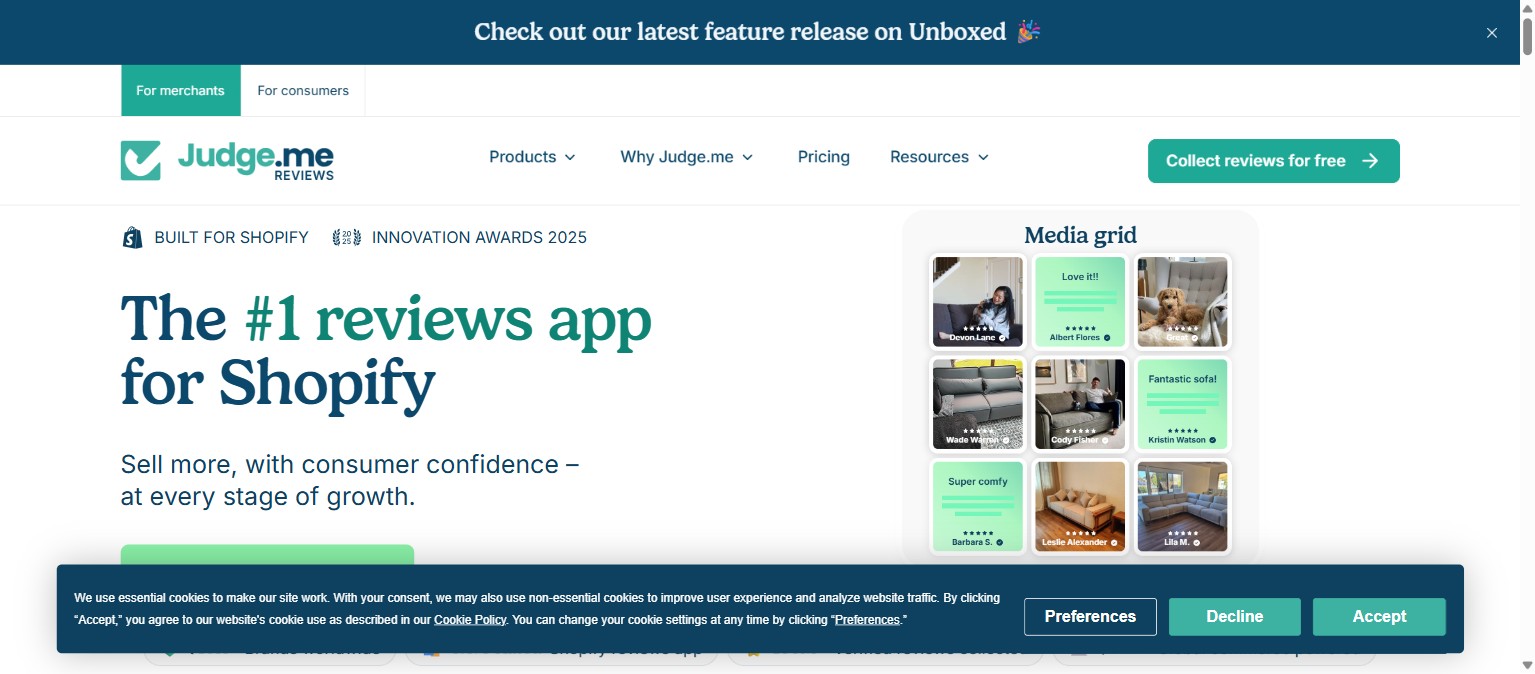
Judge.me is the default recommendation for a reason. It carries a near-perfect rating from tens of thousands of merchants, its free plan includes unlimited reviews with photos and videos, and its page-speed footprint is among the lightest in the category. The paid tier, around $15/month, is the cheapest serious option and unlocks things like review syndication and Q&A.
Advantages
- Genuinely useful free plan — unlimited reviews, photos and videos at zero cost.
- Cheapest paid tier of the serious apps (~$15/month).
- Very light on page speed — under 100ms blocking time.
- Huge install base, endlessly documented, integrates with everything.
Drawbacks
- The default widgets look functional rather than premium; brands obsessed with styling may want more control.
- It won't push customers to upload photos as aggressively as Loox does.
Verdict: if you're not sure, this is the answer. Start on the free plan, upgrade only when you need syndication.
2. Loox — the photo-review specialist
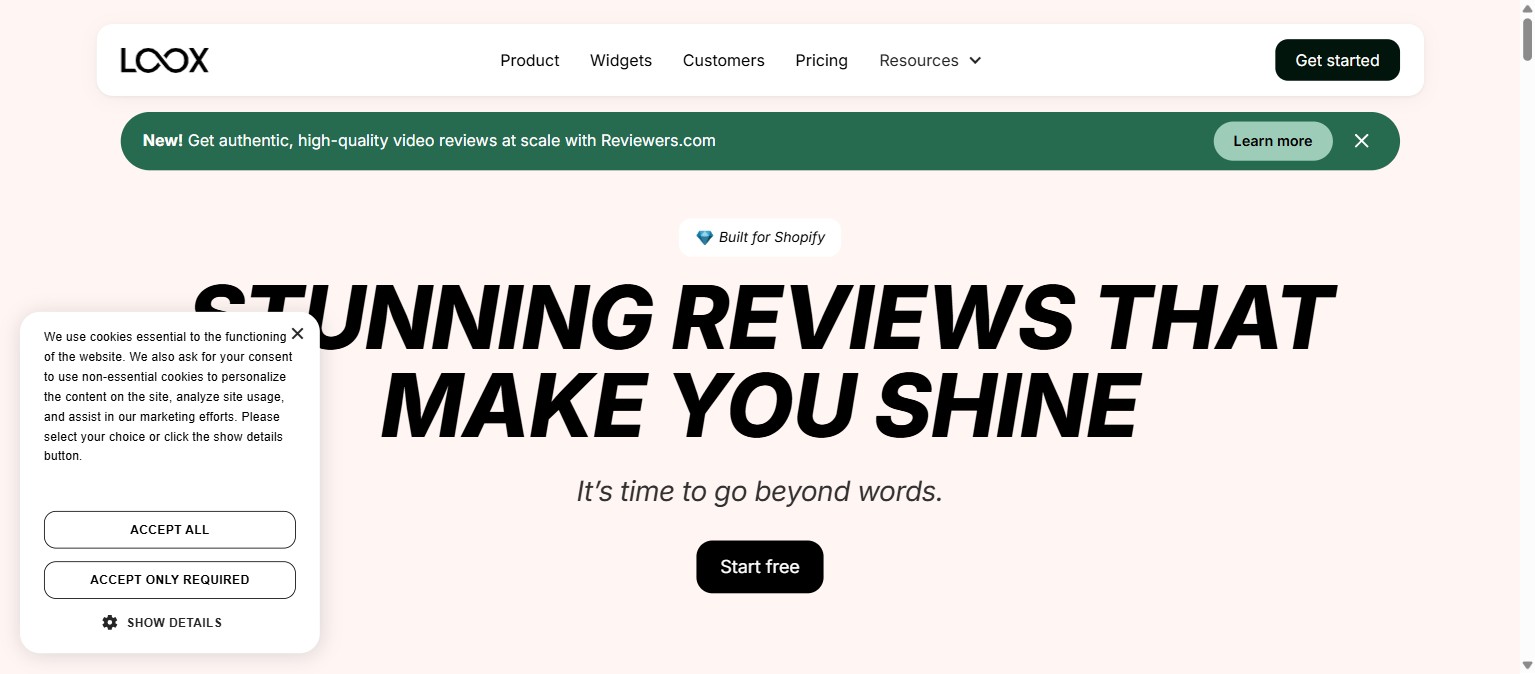
Loox is built around one belief: photos sell. Its review-request flow actively nudges customers to upload an image — often with a photo-for-discount incentive — and its galleries are the best-looking in the category. For a fashion store, a wall of real customers wearing the product is close to the highest-converting content you can put on a page.
Advantages
- Best-in-class photo collection — it engineers the upload, not just allows it.
- Beautiful, on-brand galleries and carousels that suit visual categories.
- Also includes referrals and upsells, adding revenue beyond reviews.
- Still light on page speed.
Drawbacks
- No free plan — it's paid from the entry tier.
- Pricing is capped by monthly orders, so it climbs as you grow.
Verdict: the pick for fashion, beauty and anything where seeing the product on a real person is the whole game.
3. Okendo — filterable reviews for growing brands
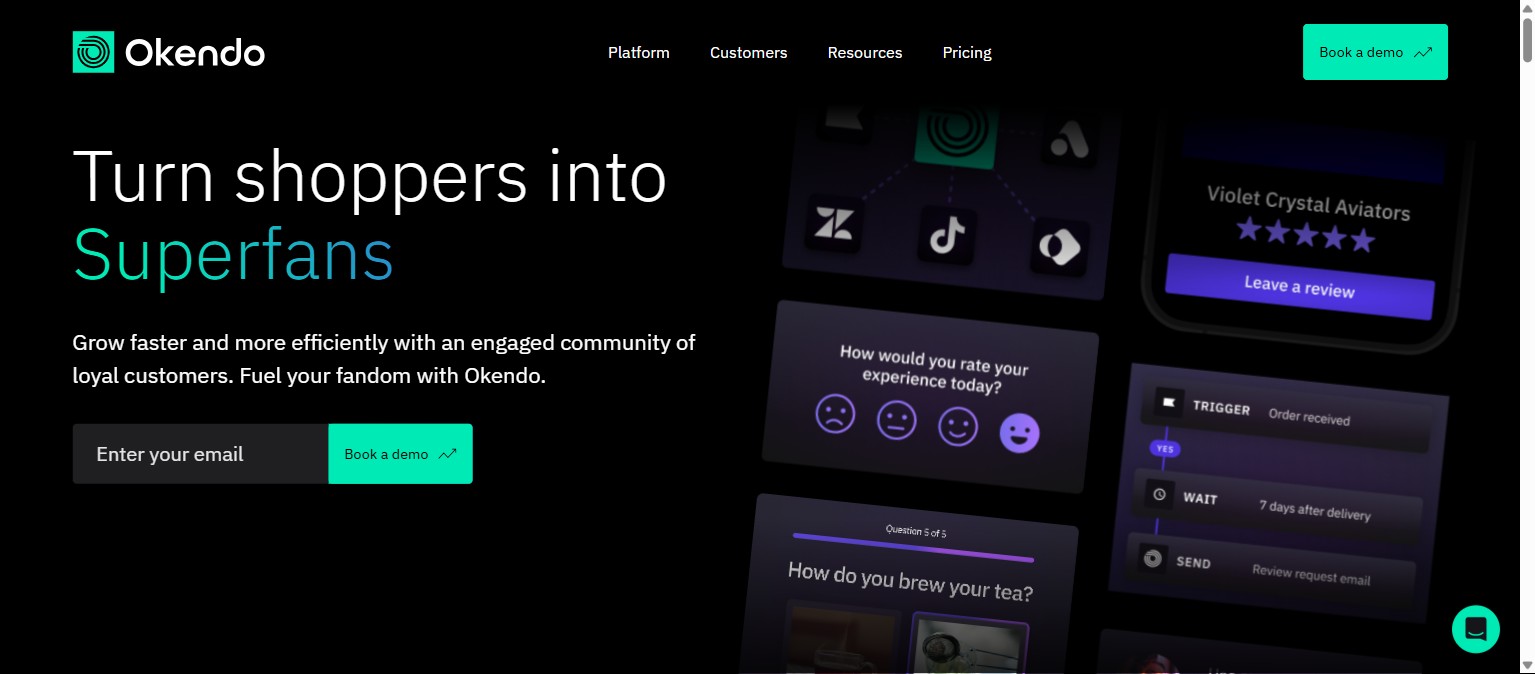
Okendo turns reviews into a research tool. Alongside stars and photos, it captures structured attributes — fit (runs small / true to size / runs large), height, body type, skin type — and lets shoppers filter reviews by them. For apparel that's transformative: a buyer can read only reviews from people with a similar build, which answers the fit question more precisely than any size chart.
Advantages
- Attribute-based reviews and filtering — "true to size," "runs small," fit and body-type tags.
- Excellent fit for fashion, beauty and DTC brands that live and die on fit accuracy.
- Strong customer-marketing suite (surveys, loyalty, referrals) beyond reviews.
Drawbacks
- More expensive than Judge.me, and a medium page-speed impact.
- More setup — the power comes from configuring attributes properly.
Verdict: the right call for a growing fashion brand where "does it fit?" is the objection you most need reviews to answer.
How to choose in one line
- You want the best free / cheapest solid option → Judge.me.
- Photos are what sell your product → Loox.
- You need reviews filterable by fit and body type → Okendo.
Whichever you install, the setting that pays for the app is the same in all three: the automated post-delivery review request with a photo incentive. Reviews you have to chase never arrive; reviews the app requests automatically compound month after month.
Where reviews stop working — and what closes the gap
Reviews answer "did other people like it?" They only partly answer "will it look right on me?" A five-star photo review from someone with a different body still leaves your shopper guessing about their own fit — and fit uncertainty is the exact hesitation reviews exist to remove but can't fully.
Let them see it on themselves. 1Match adds an AI virtual try-on to your Shopify store in about ten minutes — no 3D, no photoshoot — so a shopper can preview a product on their own photo before buying. Pair it with photo reviews and you cover both halves of the trust problem: proof that others love it, and proof that it works on them. Strong image quality across clothing, accessories and footwear, with zero photo storage.
FAQ
What is the best Shopify product reviews app?
Judge.me for most stores — top-rated, a free plan with unlimited photo/video reviews, and light on speed. Loox if photos drive sales; Okendo if you want filterable fit and size attributes.
Does Shopify have a built-in reviews app?
No longer — Shopify retired its old free Product Reviews app. Reviews now come from a third-party app, but Judge.me's free tier covers unlimited reviews with photos.
Are photo reviews worth it for a fashion store?
Yes, more than almost any category. Photos show true fit, drape and colour on real customers — the exact uncertainty that stops fashion purchases and drives returns.
How much does a Shopify reviews app cost?
Judge.me is free to ~$15/month; Loox and Okendo start around $15–$30/month and scale with orders. Enterprise suites cost far more. The gap for the same core features can top $180/month.
Do review apps slow down my store?
Some do. Judge.me and Loox add under 100ms; heavier suites add 250ms+. On mobile, favour a light app and lazy-load the widget.
 Install on Shopify