
Short answer: a Shopify wishlist app lets shoppers save products they like without checking out, then automatically emails them on price drops, restocks and low-stock alerts — converting hesitation into a warm lead you own. The three worth shortlisting: Swym Wishlist Plus (the market leader, wishlist done properly), Growave (wishlist bundled with loyalty and reviews), and Froonze (wishlist inside a full customer account portal).
Most of the people on your product pages right now will not buy today. That's not a leak to plug — it's normal. The mistake is letting that intent evaporate the moment they close the tab. A wishlist is the cheapest way to catch it: one tap saves the product, and from that tap you get an email address, a signal of what they want, and a legitimate reason to reach back out later.
For fashion and apparel it matters even more, because "I'll think about it" is the default state of someone deciding between three sizes and two colours. Here's how a wishlist app works, and the three that are actually worth installing.
What a Shopify wishlist app really does
A good wishlist app is three things wearing one button:
- A save mechanism. A heart or "Add to wishlist" button on product pages, collection pages and quick-views — ideally working for guests, without forcing a login.
- A trigger engine. This is where the money is. When a saved product drops in price, comes back in stock, or hits low inventory, the app fires an automated email. Those three emails are among the highest-converting messages an ecommerce store ever sends, because they reach a known-interested shopper at the exact moment friction disappears.
- A data layer. Every save is first-party data — a named shopper attached to a specific product. That feeds segmentation, retargeting and Klaviyo flows long after the visit.
Shopify has no native wishlist, so all three come from an app. The apps differ mostly in how far past that core they go.
The 3 best Shopify wishlist apps
1. Swym Wishlist Plus — the specialist and market leader
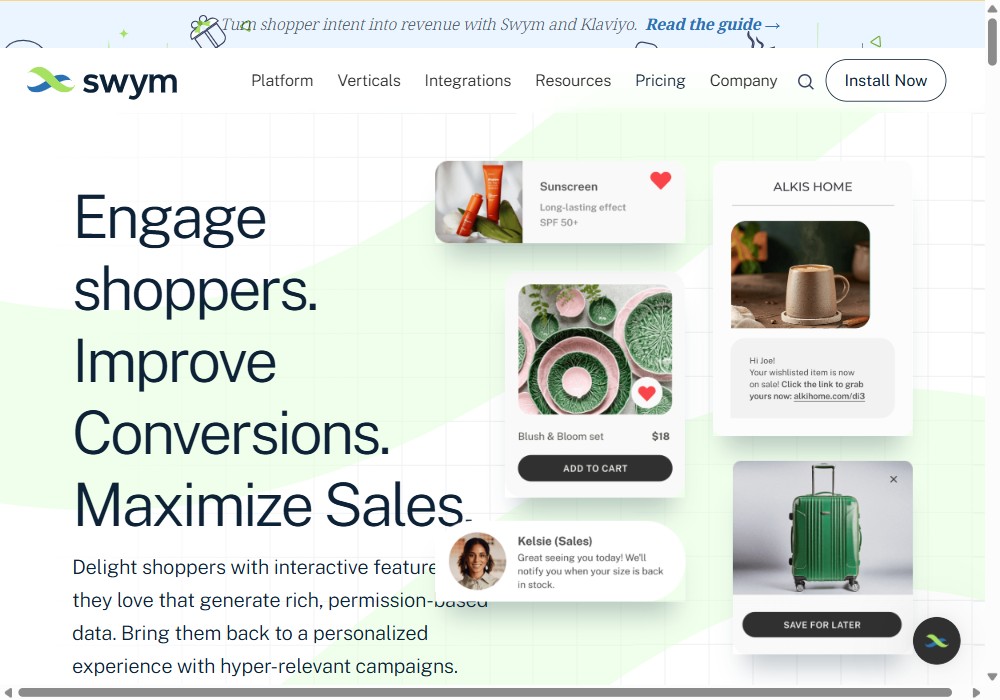
Swym's Wishlist Plus is the app most stores mean when they say "wishlist." It runs on the large majority of Shopify stores using a dedicated wishlist tool, and it shows: guest wishlists, cross-device sync, deep reporting on what shoppers save, and native price-drop, back-in-stock and low-stock alerts. It integrates cleanly with Klaviyo, so the saved-product events flow straight into your email automation.
Advantages
- The deepest, most reliable wishlist feature set — this is all it does, and it does it fully.
- Guest saving without login, plus cross-device sync for logged-in shoppers.
- Strong analytics: you see exactly which products get saved and by whom.
- Native Klaviyo events for price-drop / restock / low-stock flows.
- Used by large brands, so it scales without breaking.
Drawbacks
- It's a wishlist and nothing else — if you also want loyalty or reviews, that's another app.
- The pricing climbs on higher-volume stores.
Verdict: the default choice if the wishlist itself is what you care about. Nothing else matches its depth on this one job.
2. Growave — the wishlist inside an all-in-one suite
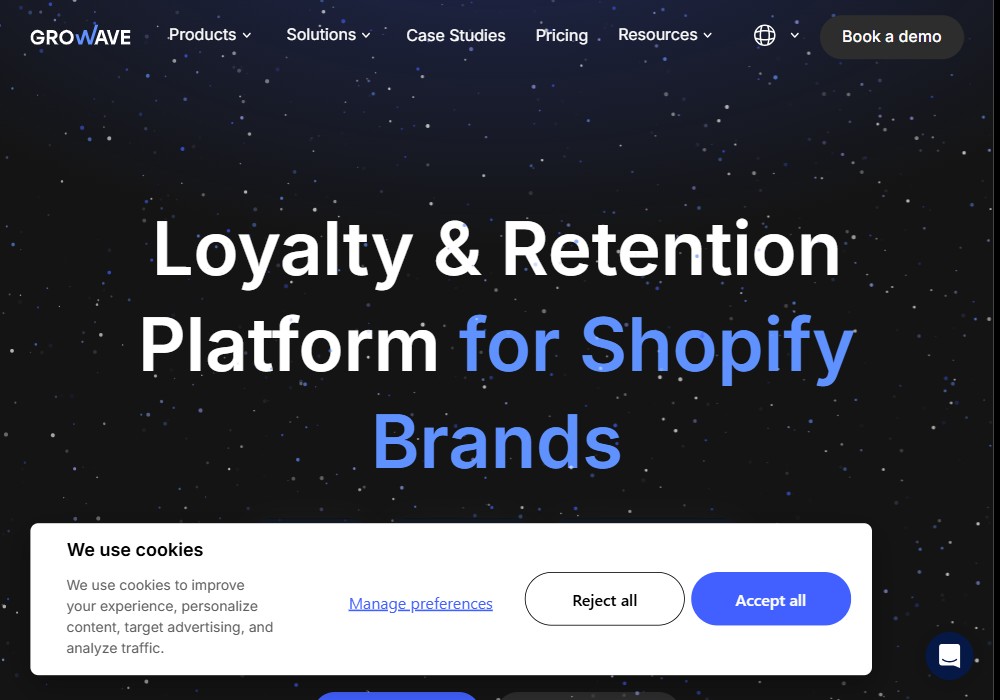
Growave doesn't sell a wishlist; it sells a retention platform — loyalty and rewards, referrals, reviews, and a wishlist — under one app and one bill. If you were about to install three or four separate apps, Growave collapses them, and the wishlist rides along with the loyalty program so a saved item and a points balance live in the same customer profile.
Advantages
- One app for wishlist + loyalty + reviews + referrals — fewer subscriptions, fewer scripts on your theme.
- The wishlist shares data with the loyalty program, enabling smarter win-back campaigns.
- Good fit for stores building a full retention stack, not just a save button.
Drawbacks
- You're paying for a suite — overkill if the wishlist is genuinely all you need.
- The wishlist is very good but not quite as deep as a pure specialist's.
Verdict: the smart pick when the wishlist is one piece of a broader loyalty plan you were going to build anyway.
3. Froonze — the wishlist inside a customer account portal
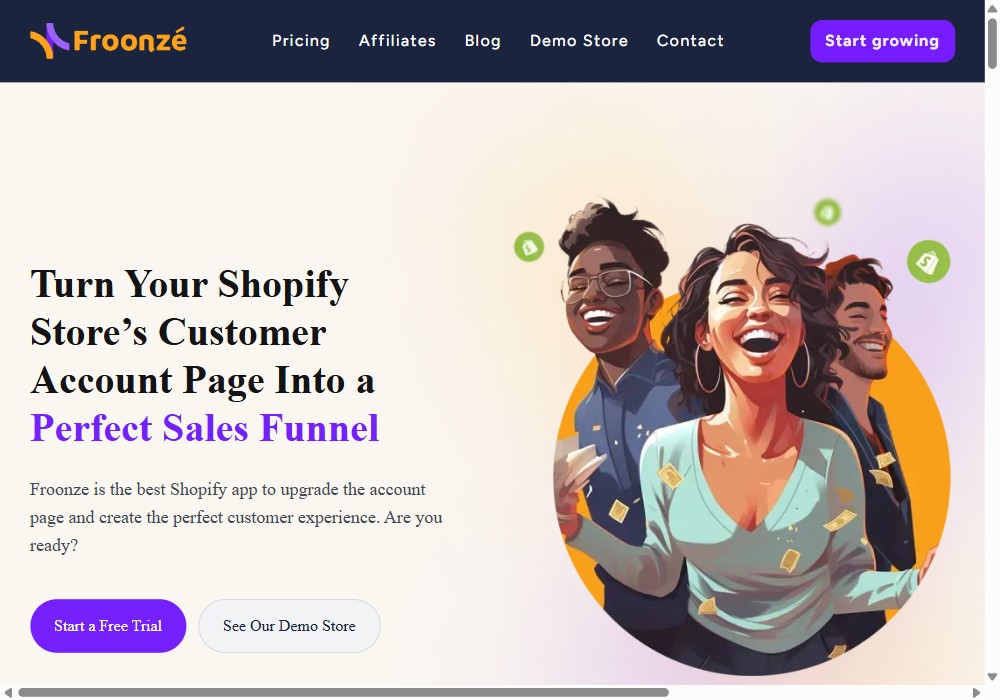
Froonze approaches the wishlist from the account page. Its core is a rich customer portal — order history, profile, loyalty, referrals — with the wishlist built in as one of the things a logged-in shopper manages there. If your priority is a polished "My Account" experience that happens to include saving products, Froonze fits that shape better than a bolt-on button.
Advantages
- Turns the default bare Shopify account page into a full customer portal.
- Wishlist, loyalty and referrals share one logged-in experience.
- Competitive pricing for the breadth of what's included.
Drawbacks
- The wishlist shines most for logged-in customers; it's less of a pure guest-save play.
- Smaller install base than Swym or Growave, so a shorter track record at scale.
Verdict: the right call when you want to upgrade the whole account experience and the wishlist is part of that, not the headline.
How to choose in one line
- You want the best wishlist, full stop → Swym Wishlist Plus.
- You want wishlist + loyalty + reviews in one bill → Growave.
- You want a real customer account portal with a wishlist inside → Froonze.
Whichever you pick, the setting that earns its keep is the same in all three: switch on the price-drop, back-in-stock and low-stock emails. The save button is the hook; those three automations are the payoff.
Where a wishlist fits in a fashion store
A wishlist tells you which products a shopper wants. It doesn't tell you whether they'll fit — and in apparel, fit is the reason "saved" so often never becomes "bought." Someone hearts a dress, gets the restock email, still isn't sure it works on them, and doesn't return.
Close that last gap. 1Match adds an AI virtual try-on to your Shopify store in about ten minutes — no 3D, no photoshoot — so a shopper can see a saved item on themselves before committing. Pair it with a wishlist and your restock email stops asking "still want it?" and starts showing "here's how it looks on you." Strong image quality across clothing, accessories and footwear, with zero photo storage.
FAQ
What does a Shopify wishlist app do?
It lets shoppers save products without buying, then automatically emails them on price drops, restocks and low-stock alerts — turning undecided browsing into warm, marketable leads.
Do I need a wishlist app or can Shopify do it natively?
Shopify has no native wishlist. You can improvise with a collection or metafield, but you lose guest saving and the automated restock/price-drop emails — which is the whole point of a dedicated app.
Are Shopify wishlist apps free?
Most offer a free tier with a monthly cap, then charge roughly $10–$50/month as you grow. Growave and Froonze fold the wishlist into a wider loyalty or portal plan.
Does a wishlist actually increase sales?
Yes — it captures purchase intent that would otherwise vanish, and the follow-up emails bring the shopper back at the moment they're most likely to convert. The saved list is also first-party data you own.
Which Shopify wishlist app is the most popular?
Swym Wishlist Plus by install base; Growave is the most common all-in-one alternative because it bundles the wishlist with loyalty, reviews and referrals.
 Install on Shopify