
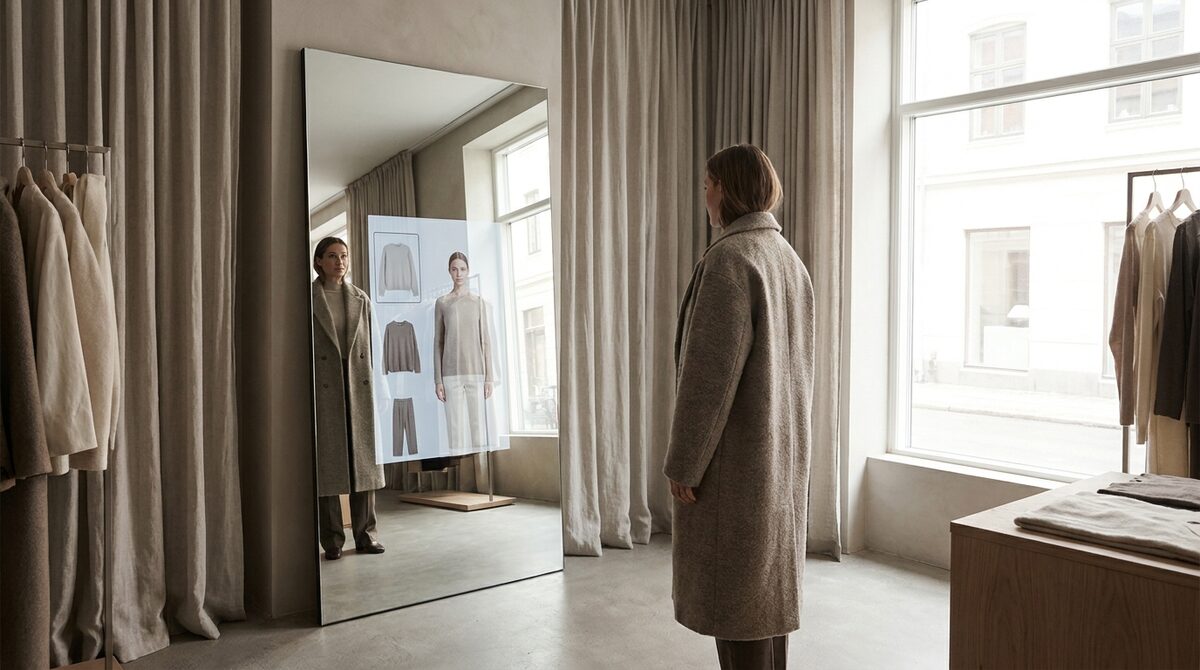
A virtual dressing room lets shoppers try clothes on their own body online before buying — no changing room, no guesswork. With 1Match it also drives a growth engine: every try-on captures a first-party lead, feeds funnel analytics, and runs zero-storage / GDPR-safe so shopper photos are never retained. Expect fewer returns and higher add-to-cart.
What a virtual dressing room actually does
A virtual dressing room recreates the single most valuable moment in fashion retail — trying something on — without the physical room. The shopper uploads a photo, and AI renders the garment onto their own body from your existing product photos. There is no 3D avatar to build and no reshoot. The result is a realistic preview that a flat product shot on a model can never match, available 24/7 on any device.
Why shoppers trust a virtual dressing room
A model wearing a size 2 tells a shopper almost nothing about how a dress will sit on them. A virtual dressing room closes that gap by showing the item on the shopper’s real frame. That confidence is why stores adding try-on see an 18–28% lift in add-to-cart. If you want the wider context, our complete guide to virtual try-on for fashion stores covers the full journey.
The returns problem it solves
Around 70% of apparel returns come down to fit and size. A virtual dressing room tackles that head-on, so expectations match reality before checkout. Stores commonly report 25–40% fewer returns, which also means lower restocking and shipping costs. See how to reduce returns for an online fashion store for the playbook.
More than clothes
The best virtual dressing rooms are fashion-first but not fashion-only. The same rendering that fits a coat can place a ring on a hand, glasses on a face, or a hat on a head — hands, face and body in one tool. That is a real advantage if you sell accessories next to apparel.
From feature to growth engine
A virtual dressing room becomes serious revenue when it feeds your data. Each try-on can capture a first-party lead and log intent into funnel analytics, so you learn which products get tried and which convert. With 1Match it all runs zero-storage, so you gain the insight while staying GDPR-safe.
Bottom line: A virtual dressing room is more than a novelty — done right it is a Shopify growth engine that drives try-on, native lead capture and funnel analytics while keeping shopper photos zero-storage and GDPR-safe. You can open yours in about ten minutes with 1Match.
Frequently asked questions
What is a virtual dressing room?
A virtual dressing room is an online tool that lets a shopper preview clothing on their own body before buying. Instead of walking into a physical changing room, they upload a photo and AI renders the garment onto them from existing product images. It answers the "how will this look on me?" question at the moment of decision.
Is a virtual dressing room accurate?
Modern AI virtual dressing rooms are accurate enough to change buying behaviour, mapping garments onto the shopper’s frame with correct draping and strong image quality. They will not measure you to the millimetre, but they remove the guesswork that drives most returns by showing style and proportion on a real body rather than a model.
Does a virtual dressing room need an app download?
No. A good virtual dressing room runs in the browser on a normal phone or laptop — the shopper just uploads a photo. With 1Match there is no headset, no depth sensor and no separate app to install, and the store-side setup takes about ten minutes.
Are photos safe in a virtual dressing room?
They can be, if the vendor is built for privacy. 1Match processes shopper images on a zero-storage basis, so photos are not retained, which keeps a store GDPR-safe. Always check a provider’s data-retention policy before enabling any photo-based feature.
 Install on Shopify