Free virtual try on clothes is real — through free apps, free trials, and free-to-use store buttons like the one 1Match adds to Shopify product pages. What separates them is image quality and privacy, not price. For merchants, a free-to-start try-on also converts browsers, captures first-party leads, feeds funnel analytics, and keeps uploads zero-storage and GDPR-safe.
The three kinds of free try-on
When people search for free virtual try on clothes, they usually mean one of three things. Knowing which you want saves disappointment.
1. Free store try-on buttons
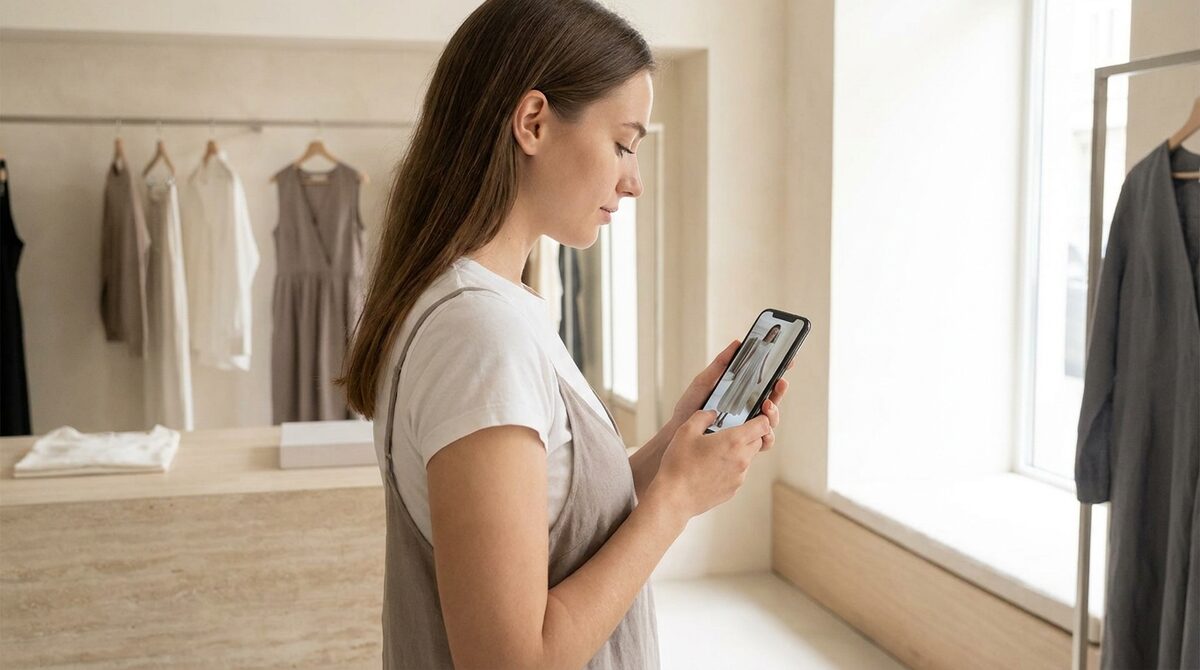
Pros: Free for the shopper, renders the exact in-stock product from the store’s photos, high accuracy. Cons: Only on stores that installed one. Verdict: The most reliable free experience.
2. Free consumer apps
Pros: Standalone, no store required. Cons: Usage caps, watermarks, variable quality and data practices. Verdict: Okay for a quick play, not for serious decisions.
3. Free trials of paid engines
Pros: Full quality briefly. Cons: Becomes paid. Verdict: Best way to test a professional tool honestly.
| Type | Cost to shopper | Quality | Best for |
|---|---|---|---|
| Store button | Free | High | Real purchases |
| Consumer app | Free tier | Variable | Casual use |
| Free trial | Free then paid | High | Testing tools |
Why quality beats price
A free preview is worthless if it looks fake. The rendering engine is everything: strong image quality makes fabric, folds and fit believable, while weak tools produce warped, uncanny results. Our best virtual try-on apps for Shopify compares the field, and the virtual fitting room explained explains what a good preview should deliver.
The privacy question
Some free apps are quiet about what they do with your photo. Privacy-first tools like 1Match process the image to create the preview and never keep it, which keeps the flow zero-storage and GDPR-safe. That matters more than saving a few dollars.
For merchants, free-to-start is the smart move
If you sell clothing, offering shoppers a free, accurate try-on is a conversion lever. It installs in about ten minutes from your existing photos, cuts returns by 25–40%, and lifts add-to-cart 18–28%. See reduce returns in an online fashion store for how that adds up, and the best Shopify app for a clothing store for choosing a tool.
Free for shoppers, valuable for stores
There is a neat alignment worth noticing. The best free virtual try on clothes experience for a shopper — a fast, accurate, private preview of a real product — is also the most valuable thing a merchant can offer. The shopper pays nothing and gets confidence; the store pays for a widget and gets fewer returns, higher add-to-cart and a stream of first-party leads. Everyone is better off, which is rarely true of gimmicky free tools.
That is why the free store button beats the free consumer app for anyone making a real purchase. It renders the exact item in stock, from clean product photos, on a zero-storage and GDPR-safe engine, and it costs the shopper nothing. If you run a store, offering that is one of the cheapest conversion upgrades available, and it installs in about ten minutes without a reshoot.
It is also worth separating truly free from free-with-strings. A tool that is free because it monetises your data is not really free; a tool that is free to the shopper because a merchant pays a modest subscription is a fair, transparent arrangement. When you evaluate any free clothing try-on, ask who is paying and how, and favour the arrangements where the incentives are clear. The healthiest model is the one where the shopper gets a great free preview, the merchant gets more sales and fewer returns, and nobody is quietly harvesting a library of faces to fund the free tier.
For the shopper, the practical takeaway is simple: prefer the free try-on that lives on the store you are actually buying from, since it shows the real product and is built for accuracy. Keep standalone free apps for idle curiosity, and always glance at how a tool treats your photo before you upload. A minute of caution up front protects you from the handful of free apps whose business model is quietly built on the images you feed them.
The bottom line: free virtual try on clothes is easy to find, but quality and privacy are what make it useful. For a store, the same free-to-start try-on becomes a Shopify growth engine — converting hesitation, capturing native leads, feeding funnel analytics, and staying zero-storage and GDPR-safe. Explore it with 1Match.
Frequently asked questions
Is there a free virtual try on for clothes?
Yes. Free consumer apps, free trials of paid tools, and free-to-use try-on buttons on merchant stores all exist. For shoppers, the try-on button on a store running 1Match is free to use and renders the real product. Fully free consumer apps usually cap usage or reduce quality.
What do free clothing try-on tools limit?
Typically the number of try-ons, output resolution, or they add watermarks. Some limit the catalogue you can try from. Merchant widgets may be free to trial then move to a usage or monthly plan, while the shopper-facing preview stays free for the shopper.
Are free try-on results accurate?
It depends entirely on the rendering engine. A weak free tool warps garments and looks artificial; a strong engine reproduces fabric and fit believably. Judge any tool by its image quality on a real photo before trusting it for buying decisions.
Is my data safe with free try-on apps?
Not automatically — check the policy. Privacy-first tools such as 1Match process the photo to build the preview and do not store it, keeping things zero-storage and GDPR-safe. Be wary of unknown free apps that are unclear about what they do with uploads.
 Install on Shopify