
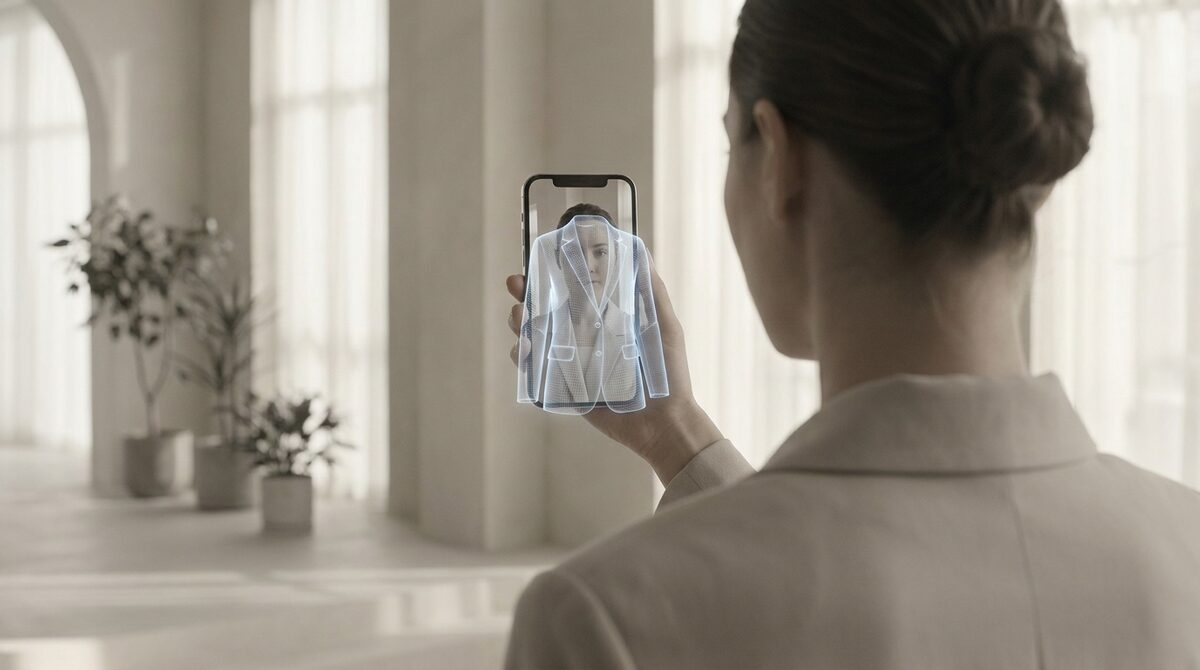
Augmented reality fashion brands add try-on so shoppers see items on their own body before buying — and increasingly on every product page. With 1Match, that try-on powers a growth engine: native first-party leads, funnel analytics, and zero-storage / GDPR-safe handling. It is why independents can now match enterprise experiences.
Who counts as an augmented reality fashion brand
The category is broader than it looks. Global eyewear and sportswear names built AR try-on into their apps years ago, but the fastest growth is among independent Shopify stores using app-based try-on. What unites them is intent: let the shopper see the product on themselves so appearance and fit stop being a gamble.
Why the quiet rollout to every page
Returns are the silent margin-killer in online apparel, and fit-and-size uncertainty drives roughly 70% of them. Brands add try-on to every product page because realistic previews cut returns 25–40% and lift add-to-cart 18–28%. When the tool works from existing product photos with no 3D, extending it catalogue-wide costs almost nothing. See how to reduce returns in an online fashion store.
Enterprise experiences, independent budgets
The old barrier was production: custom 3D and reshoots put AR out of reach for smaller brands. AI try-on removed it. Now an independent store can offer the same “see it on me” confidence a major brand does, covering hands, face and body — rings, glasses, hats and clothes — from one tool with a 10-minute setup. For where the tools stand, read our best virtual try-on apps for Shopify fashion in 2026.
The data brands actually want
Beyond the render, try-on generates first-party signal. Every interaction can capture a lead and feed funnel analytics, telling a brand which products win and where shoppers hesitate — all while staying zero-storage / GDPR-safe. That measurable layer is why forward-looking brands treat try-on as growth infrastructure, not decoration. More context in the complete guide to virtual try-on.
How to join them
Install 1Match, connect your existing product images, and switch on try-on in about ten minutes — no developer, no photo shoot.
What the leaders do differently
The brands winning with augmented reality do not treat it as a bolt-on demo. They put try-on on every relevant product page, use the resulting imagery in ads and emails, and act on the funnel data it generates. The difference is treating AR as infrastructure — a permanent part of how the store presents product — rather than a seasonal campaign trick that appears and disappears.
They also obsess over realism. Leaders know a mediocre render can do more harm than no render at all, so they prioritise image quality and a consistent experience across categories, from clothes to glasses to rings.
How independents catch up fast
The gap between a global brand and an independent store has narrowed to almost nothing on this front. An indie merchant can install an AI try-on app, connect an existing catalogue, and be live in about ten minutes with the same “see it on me” confidence a major label offers. Because it works from existing product photos, there is no production barrier to hold a smaller team back.
The pattern to copy
The habit that separates augmented reality fashion brands from the pack is consistency: try-on everywhere it helps, realism they refuse to compromise, and a discipline of acting on the funnel data it produces. None of that requires an enterprise budget anymore. It requires choosing a tool built like infrastructure and treating the feature as permanent.
Copy that pattern and an independent store can present product with the same confidence as the brands it admires.
Bottom line: augmented reality fashion brands win because try-on is a Shopify growth engine — realistic previews plus native leads and funnel analytics, kept zero-storage and GDPR-safe. You can match them today with 1Match.
Frequently asked questions
Which fashion brands use augmented reality?
From global eyewear and sportswear names to independent Shopify stores, augmented reality fashion brands span the spectrum. Large brands often build custom experiences, while independents deploy app-based AI try-on that works from existing product photos. The common goal is letting shoppers see items on themselves before buying.
Why are augmented reality fashion brands growing?
Because AR directly attacks the biggest cost in online apparel: returns driven by fit-and-size doubt, around 70% of the total. Realistic try-on typically cuts returns 25–40% and lifts add-to-cart 18–28%. As tools got easier to install, adoption spread from enterprise to independent brands.
Do I need a big budget to join augmented reality fashion brands?
No. AI-based try-on removes the need for 3D assets and reshoots by working from your current catalogue. With 1Match the setup is about ten minutes, so independent brands can match enterprise experiences without an enterprise budget.
How do augmented reality fashion brands handle data?
Responsible brands use zero-storage, GDPR-safe try-on where shopper photos are never retained. This protects customers and simplifies compliance. 1Match is built this way; any brand adding AR should confirm the provider’s policy.
 Install on Shopify