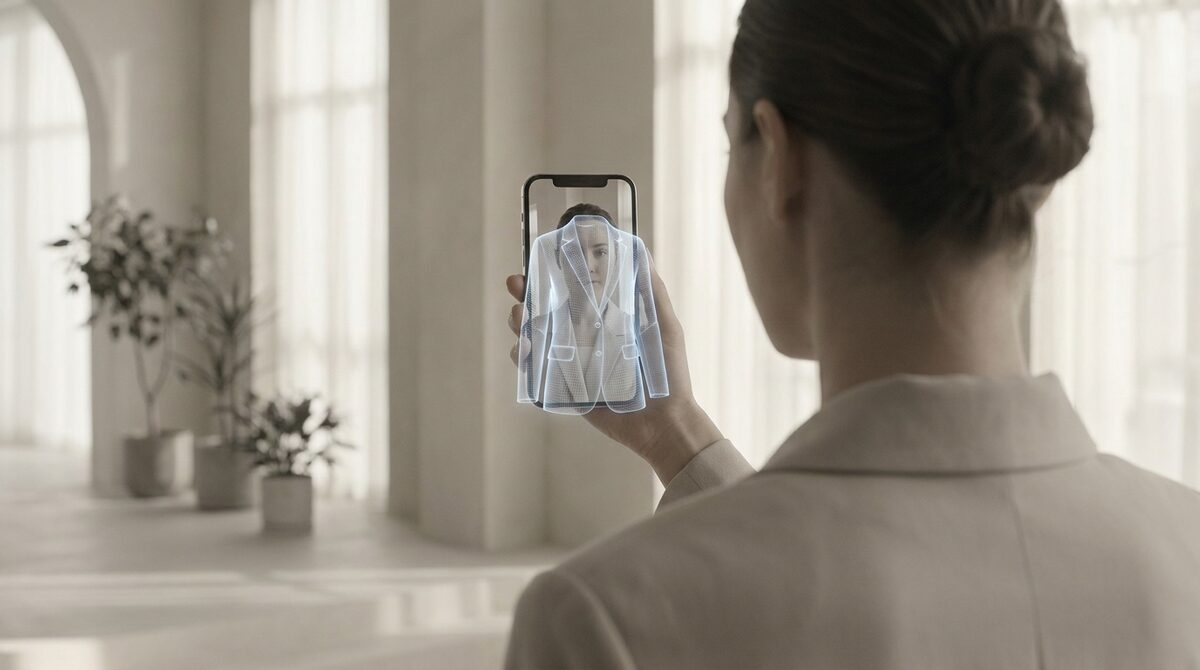
A virtual fashion designer creates and previews garments digitally, but the design only earns revenue once shoppers can see it on their own body. With 1Match, that on-body try-on drives a growth engine: native first-party leads, funnel analytics, and zero-storage / GDPR-safe handling. Design creates the product; try-on sells it.
What a virtual fashion designer does
A virtual fashion designer works in the digital space before physical production — shaping cut, colour, fabric and fit on a screen instead of cutting samples. This saves time and material, speeds iteration, and lets a brand see a garment before committing to manufacturing. It is a powerful upstream tool for the creation side of fashion.
The gap between design and sale
A stunning digital design still faces the same online obstacle every product does: the shopper cannot try it on. That is where the workflow needs a bridge. Virtual try-on takes the finished, real product and renders it onto the shopper, working from your existing product photos with no 3D and no reshoot. See how an AI clothes changer works for how the render is produced.
Closing the loop on the product page
Once a designed garment is live, try-on lets shoppers judge it on their hands, face and body — the same engine handling rings, glasses, hats and clothes. This turns a designer’s vision into a confident purchase decision, not just a nice product photo. For the shopper-side view, read the virtual fitting room explained.
Cutting waste at both ends
Digital design reduces sampling waste in production; virtual try-on reduces returns after purchase — typically 25–40% fewer — by resolving fit doubt at the page. Add an 18–28% add-to-cart lift plus native lead capture and funnel analytics, and the design-to-sale pipeline becomes measurably efficient. To compare try-on tools, see our best virtual try-on apps for Shopify fashion in 2026.
Connecting design to your store
Once your designed products are on Shopify, install 1Match, connect the product images, and enable try-on in about ten minutes. No 3D pipeline, no reshoot, no developer.
Faster iteration, less waste
The upstream case for a virtual fashion designer is compelling on its own. Digital iteration lets a team test cuts, colourways and fabrics without cutting a physical sample for each, which shortens development cycles and reduces material waste. Decisions that once waited on a sample can be made from a screen, and only the strongest candidates ever reach production. That efficiency alone justifies the tooling for many brands.
But efficiency in the studio does not automatically translate to sales online. The finished product still has to convince a shopper who cannot touch it, which is exactly the problem try-on was built to solve.
One workflow, end to end
Joined up, the pipeline is elegant: design digitally, produce the winners, publish them to Shopify, and let try-on render each piece onto real shoppers. The same existing product photos that sell the item also power the preview, so there is no extra production step between design and demand. It is a single, low-waste workflow from first sketch to confident checkout.
The full-circle summary
A virtual fashion designer saves time and waste in the studio; virtual try-on captures the sale at the storefront. Neither replaces the other — together they form a low-waste loop from first sketch to confident checkout. The connective tissue is your existing product imagery, which serves both the design decision and the shopper’s preview.
Join the two and the whole pipeline, from concept to cash flow, runs leaner.
Bottom line: a virtual fashion designer creates the product, and a Shopify growth engine sells it — realistic try-on plus native leads and funnel analytics, kept zero-storage and GDPR-safe. Close the loop with 1Match.
Frequently asked questions
What is a virtual fashion designer?
A virtual fashion designer is a tool or workflow for creating and previewing garments digitally before they are physically produced. It helps visualise fit, colour and cut without a sample. Once a design becomes a real product, virtual try-on lets shoppers see it on themselves.
How does virtual fashion design connect to selling?
Design tools create the garment; virtual try-on sells it by showing the finished product on real shoppers. The bridge matters: a beautifully designed piece still needs a believable on-body preview to convert online. AI try-on supplies that from your existing product photos.
Do virtual fashion designer tools reduce returns?
Design tools improve fit and reduce sampling waste upstream, but the measurable storefront return reduction — typically 25–40% — comes from virtual try-on at the product page. Together they cut waste in both production and post-purchase.
Can small brands use virtual fashion design and try-on?
Yes. Design software has become accessible, and AI try-on removes the cost of 3D assets by working from existing photos. With 1Match, adding try-on takes about ten minutes, so independent designers can sell digitally-designed products with confidence.
 Install on Shopify