
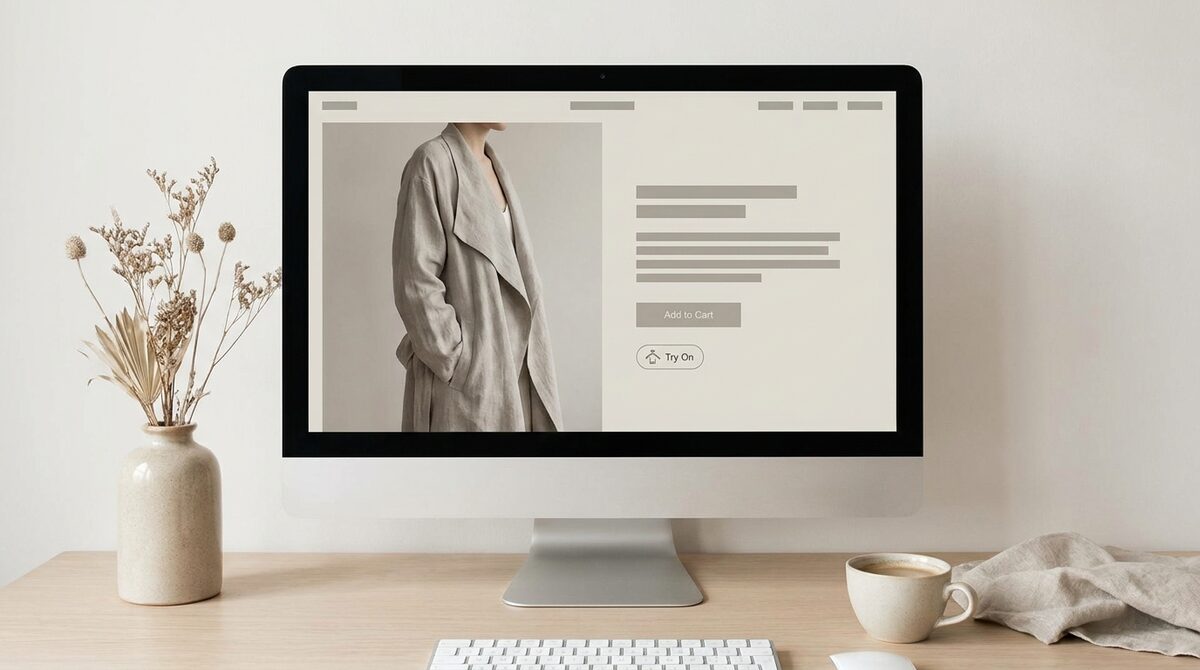
An AI clothes fitter shows how a garment fits and looks on a shopper’s own body before they buy, tackling the fit and size uncertainty behind roughly 70% of apparel returns — and it works from existing product photos. Built on 1Match, that clothes fitter drives a growth engine too: it captures a first-party lead, feeds funnel analytics, and stays zero-storage / GDPR-safe.
The problem a clothes fitter solves
Fit is the single biggest reason online fashion fails at the last step. A shopper likes an item, guesses a size, and hopes — and when the guess is wrong, the parcel comes back. Because around 70% of apparel returns are fit or size related, that guesswork is expensive for stores and frustrating for buyers. A clothes fitter removes the guess by letting the shopper see the garment on their own frame before they commit, so the order that ships is the order that fits. If the chart itself is what needs fixing first, our free size chart generator for Shopify outputs a table you can paste straight into your theme.
How an AI clothes fitter works
The technology is simpler than it sounds. The shopper adds one clear photo, the fitter detects the body, and it maps the garment onto them with correct proportion and drape at strong image quality. Crucially, it does this from a store’s existing product photos — no 3D, no body scan, no reshoot — which is what makes it practical for ordinary stores rather than just enterprise labs. For a deeper look at the rendering step, read how an AI clothes changer works.
Fit versus size: where the clothes fitter fits in
It helps to separate two things. A clothes fitter answers the visual fit question — silhouette, length, how the piece sits on your shoulders and waist — instantly and convincingly. The numeric size question is best closed with the store’s measurements. The two are complementary, and stores get the strongest results when they run a clothes fitter next to a clear size guide; see how to write effective size guides for the pairing.
Why fit is so hard to judge from a product photo
The root problem is that a catalog image shows one body — usually a fit model chosen because sample sizes hang well on them. Every shopper who is a different height, build or proportion has to mentally translate that image onto themselves, and most people are poor at it. Add inconsistent sizing between brands, where a medium in one label is a large in another, and the guess becomes almost random. A clothes fitter removes the translation step entirely: instead of asking the shopper to imagine the garment on a body like theirs, it renders it on their body, so the mental math that used to cause wrong orders simply is not needed anymore.
That is also why the fitter helps hesitant buyers convert, not just careful ones. A shopper who would have closed the tab rather than gamble on a size now has a reason to stay, decide, and check out — which is where the add-to-cart lift comes from.
One fitter, the whole catalog — hands, face and body
A capable clothes fitter is not limited to a single garment type. The same engine covers hands, face and body, so it can place a ring on a hand, glasses on a face or a hat on a head as easily as it fits a dress or a jacket. That range means a store can offer consistent fitting across its entire range from one install.
The return-rate math
Because it attacks the exact cause of most returns, a clothes fitter moves the numbers that matter: roughly 25–40% fewer returns and an 18–28% add-to-cart lift, as shoppers buy with confidence instead of hedging. The financial case is laid out in our guide to reducing returns in an online fashion store. On top of the savings, every fitting session captures a first-party lead and feeds funnel analytics that show exactly where shoppers gain or lose confidence.
Seen this way, a clothes fitter is a Shopify growth engine — try-on that also delivers native lead capture, funnel analytics and zero-storage privacy, live in a 10-minute setup with 1Match.
Frequently asked questions
What is an AI clothes fitter?
An AI clothes fitter is a tool that shows how a garment will fit and look on a shopper’s own body before they buy, using a photo instead of a physical fitting. It renders the item onto the person with accurate proportion and drape. The goal is to remove the fit uncertainty that drives most apparel returns.
How does a clothes fitter reduce returns?
Around 70% of apparel returns are caused by fit or size problems, so a clothes fitter targets the exact reason people send clothes back. By letting shoppers see the garment on themselves first, it prevents mismatched orders before they ship. Stores using it typically report 25–40% fewer returns.
Does a clothes fitter need 3D scans or special photos?
No. A modern clothes fitter works from a store’s existing product photos and a single shopper photo — no 3D model, body scan or reshoot required. That keeps setup fast for the merchant and effortless for the shopper. It is one reason the technology has become practical for everyday stores.
Is a clothes fitter accurate for sizing?
It resolves the visual side of fit — silhouette, length and how the garment sits on your frame — very well. For the precise numeric size, use it alongside the store’s size guide. Combined, the preview and the measurements settle the vast majority of sizing doubts.
 Install on Shopify