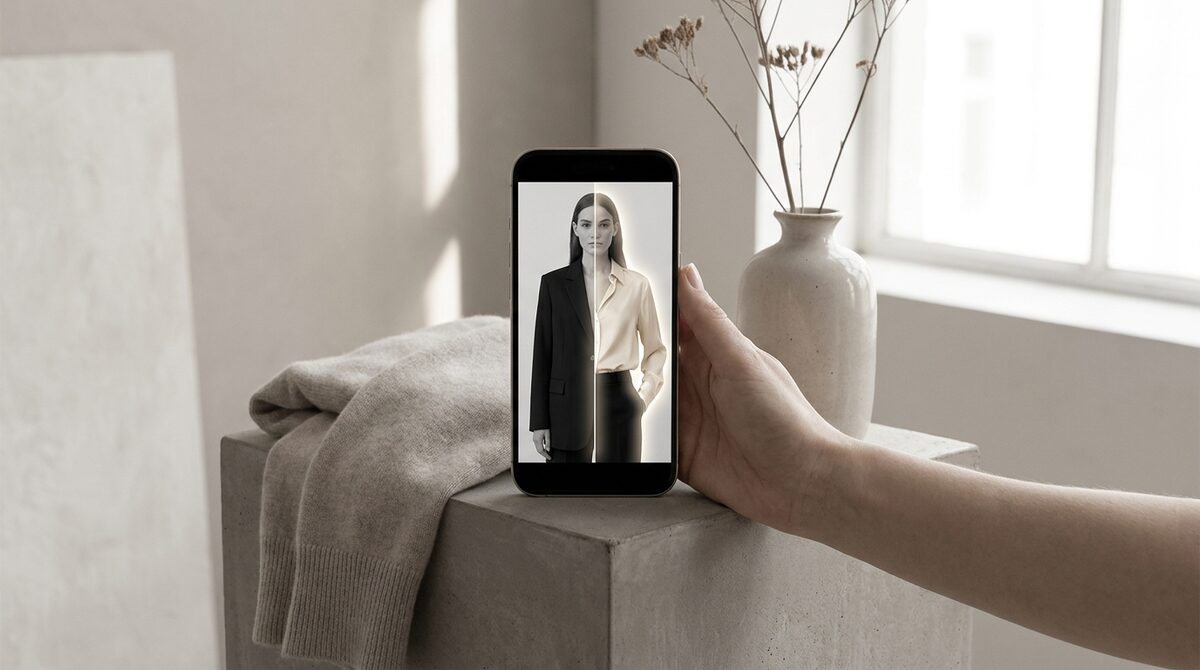
A free AI clothes changer swaps outfits on a photo at no cost, though free tiers usually add watermarks, caps or lower quality. For a personal edit that is fine. For a Shopify store, try-on should be a growth engine that converts shoppers, captures first-party leads, drives funnel analytics, and keeps photos zero-storage and GDPR-safe — which is what 1Match delivers in a 10-minute setup.
What "free" really covers
A ai clothes changer free tier is a sample, not the full product. You typically get a limited number of edits, a watermark, capped resolution, or a queue. That is a fair exchange for casual use — you get to swap an outfit on a photo without paying. The important thing is to understand the boundaries before you rely on it for anything serious.
Free tiers that are worth trying
1. Consumer web changers
Pros: Instant, no cost, nothing to install.
Cons: Watermarks, caps, variable realism, and uploads are often stored.
Verdict: Great for a single throwaway image, poor for repeat or professional use.
2. Freemium apps (Fitroom-style)
Pros: Cleaner mobile experience, a few free try-ons before paywall.
Cons: Not built for a catalogue, no lead capture or analytics.
Verdict: Fine for individuals experimenting on their phone.
3. Developer APIs with free credits (FASHN-style)
Pros: Good output and a small free allowance to prototype.
Cons: You build the storefront and funnel yourself; free credits run out fast.
Verdict: Useful for technical teams evaluating quality.
Free vs paid: what changes
| Aspect | Free tool | 1Match (paid) |
|---|---|---|
| Image quality | Variable | Strong |
| Catalogue coverage | No | Yes |
| Leads + analytics | No | Yes |
| Zero-storage | Rarely | Yes |
| Setup | Instant, limited | 10 minutes, full |
Why stores outgrow free tools fast
The moment a clothes changer needs to run on real products and real customers, free tiers hit a wall. They cannot cover your catalogue, cannot capture a lead, cannot report into your funnel, and cannot promise a zero-storage policy. That is the exact gap a store-ready try-on fills — and the reason try-on pays for itself by cutting returns 25–40% and lifting add-to-cart 18–28%.
The honest recommendation
Use a free AI clothes changer to experiment and learn what the technology can do. When you are ready to sell, invest in realism, coverage, privacy and data. Compare the paid options in our best try-on apps guide.
Reading between the lines of a free tier
Not all free tiers are equal, and the fine print tells you which is which. A generous, honest free tier states its limits plainly and deletes your photo after processing. A predatory one is vague about data, buries a watermark, and exists mainly to harvest training images. When you evaluate a ai clothes changer free tier, read the privacy note first and the feature list second. A tool that is upfront about what it keeps is usually the one you can trust with anything beyond a throwaway edit.
When paying is the cheaper option
It sounds backwards, but for a store the paid tool is often cheaper per result. Free tiers cap usage, watermark output and vary in quality, so you spend time re-running and cleaning up images you still cannot use commercially. A paid, store-grade engine gives you unlimited usable renders across your catalogue, consistent realism, and data that turns each try-on into a measurable funnel step. Factor in the returns it prevents — 25–40% fewer — and the add-to-cart it drives — 18–28% more — and the subscription pays for itself. Free is the right tool for learning; paid is the right tool for earning.
The bottom line
Free clothes changers are the right way to learn what the technology can do, and the wrong way to run a business. The honest test is simple: read the free tier's data policy first, then its feature limits, and use it only for edits you would be happy to throw away. When you need usable images across a whole catalogue, dependable realism, lead capture and a zero-storage guarantee, the paid, store-grade tool is actually cheaper per result and pays for itself through fewer returns and higher carts. Free is for experimenting; paid is for earning. Knowing which mode you are in keeps the decision — and the spend — straightforward.
For a store, the goal is a Shopify growth engine: try-on that converts browsers, captures native leads, feeds funnel analytics, and keeps every shopper photo zero-storage and GDPR-safe. You can add 1Match in about ten minutes.
Frequently asked questions
Is there a truly free AI clothes changer?
Free tiers exist, but they come with limits: watermarks, low resolution, daily caps or queues. A genuinely free ai clothes changer is best for one-off edits. Store-grade tools charge because they handle catalogues, lead capture and analytics.
What is the catch with a free AI clothes changer?
The usual trade-offs are reduced quality, usage caps and uncertain data handling. Many free tools also keep your uploaded photo. You pay in quality and privacy rather than money, which is fine for a hobby but risky for a business.
Can a free AI clothes changer run my Shopify store?
No. Free tools cannot connect to your catalogue, sit on product pages, or capture leads and analytics. For selling you need a Shopify-native app such as 1Match, which is zero-storage and GDPR-safe and installs in about 10 minutes.
How do I judge a free clothes changer before trusting it?
Test your hardest garments — prints, layers, light fabrics — and read the privacy policy to see if uploads are stored. If quality is inconsistent or data handling is vague, it is not suitable for customer photos or selling.
 Install on Shopify