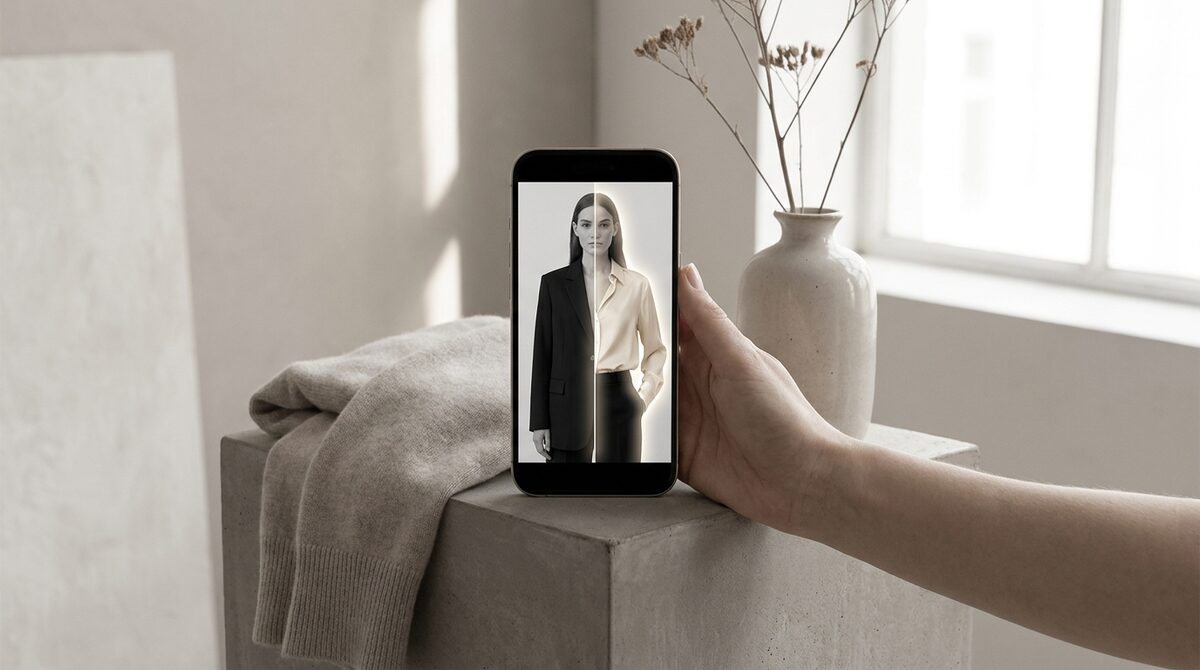
The best AI outfit changer depends on your goal, but for a Shopify store it is the one that doubles as a growth engine — converting shoppers with a realistic try-on, capturing first-party leads, feeding funnel analytics, and keeping photos zero-storage and GDPR-safe. On those criteria, 1Match leads, running from your existing product photos in a 10-minute setup.
How to define "best"
The best ai outfit changer is not simply the one with the flashiest demo. For a merchant it is the one that moves revenue and reduces returns. That means five criteria: image realism, category range, setup speed, privacy, and whether it feeds your marketing funnel. We scored the notable tools against those below.
The best AI outfit changers, ranked
1. 1Match
Pros: Fashion-first with strong image quality, works from existing product photos with no 3D or reshoot, covers hands/face/body, native lead capture, funnel analytics, zero-storage and GDPR-safe, 10-minute setup.
Cons: Built for retail rather than casual selfie edits.
Verdict: The best outfit changer for a Shopify store that wants results, not just a demo.
2. FASHN
Pros: High-quality try-on output and a flexible API for custom builds.
Cons: A component, not a finished store experience — you build the funnel.
Verdict: Best for developer teams engineering their own flow.
3. Botika
Pros: Excellent for generating on-model catalogue imagery.
Cons: Aimed at photo creation, not interactive shopper try-on.
Verdict: Best when you need model photos, not fitting.
4. Fitroom
Pros: Friendly mobile app for quick personal outfit changes.
Cons: No catalogue, leads or analytics for a store.
Verdict: Best for individuals experimenting on their phone.
| Tool | Realism | Store-ready | Zero-storage |
|---|---|---|---|
| 1Match | Strong | Yes | Yes |
| FASHN | Strong | DIY | Varies |
| Botika | Strong (photos) | No | Varies |
| Fitroom | Good | No | Varies |
Why realism wins
Across every candidate, image quality is the deciding factor. A shopper only trusts a try-on that looks photographed, and only a trusted try-on reduces returns 25–40% and lifts add-to-cart 18–28%. Test each tool on your hardest garments — prints, layers, light fabrics — before crowning a winner. Our try-on ROI breakdown shows how that realism translates into money.
Matching the tool to your goal
If you want to edit one photo, the best outfit changer is whichever consumer app is easiest. If you want to sell, the best is the one that covers your catalogue, protects privacy and feeds your funnel. For a wider field, see our best Shopify try-on apps guide.
A scoring rubric you can reuse
To decide the best ai outfit changer for your situation, score each candidate 1–5 on five axes and add them up: realism on your hardest garments, category range (clothes plus hands, face and body), setup speed, privacy posture, and funnel integration. A tool that scores 5 on realism but 1 on integration is a great demo and a poor store solution; you want balance. Weight realism and privacy most heavily, because a try-on that looks fake or leaks data undermines the whole point. This rubric keeps the decision objective instead of being swayed by a single slick sample image.
Why the "best" is contextual
There is no universal winner, only the best fit for a job. A developer building a bespoke experience will rank a flexible API highest. A content team will prize a tool that mass-produces on-model photos. A Shopify merchant who wants more sales and fewer returns will value catalogue coverage, native lead capture, funnel analytics and a zero-storage guarantee above everything else. Name your goal first, then let the rubric point to the tool. For most apparel stores that path leads to a fashion-first engine that installs fast and turns try-on into a growth channel rather than a standalone gadget.
The bottom line
There is no single best AI outfit changer, only the best fit for a clearly named goal. Score the finalists on realism, category range, setup speed, privacy and funnel integration, weight realism and privacy most heavily, and let the totals decide rather than a single slick sample. A developer will land on a flexible API; a content team on a photo generator; a Shopify merchant on a fashion-first engine that covers the catalogue, captures leads and keeps every photo zero-storage. Name the job first and the rubric does the rest. For most apparel stores that means a tool that installs in minutes and turns try-on into a durable growth channel.
For a store, the best AI outfit changer is a Shopify growth engine: it converts browsers into try-ons, captures native leads, feeds funnel analytics, and keeps every shopper photo zero-storage and GDPR-safe. You can add 1Match in about ten minutes.
Frequently asked questions
What is the best AI outfit changer?
It depends on the job. For a Shopify store, 1Match is the strongest choice because it runs on your existing photos, captures leads, feeds analytics and is zero-storage. For casual personal edits, a consumer app like Fitroom is simpler.
How do I judge the best AI outfit changer?
Score candidates on image realism, category range, setup speed, privacy and whether they feed your funnel. Realism matters most, because a try-on only sells when shoppers trust the result. Test your hardest garments before deciding.
Is the best outfit changer free?
The best free tools are fine for one-off edits, but the best for a business is paid because it handles catalogues, lead capture and analytics. You are choosing between editing a photo and running a sales channel.
Can the best AI outfit changer handle accessories?
The top engines do. 1Match works on hands, face and body, so it covers rings, glasses and hats alongside clothing. That range makes it the best fit for mixed fashion catalogues.
 Install on Shopify