
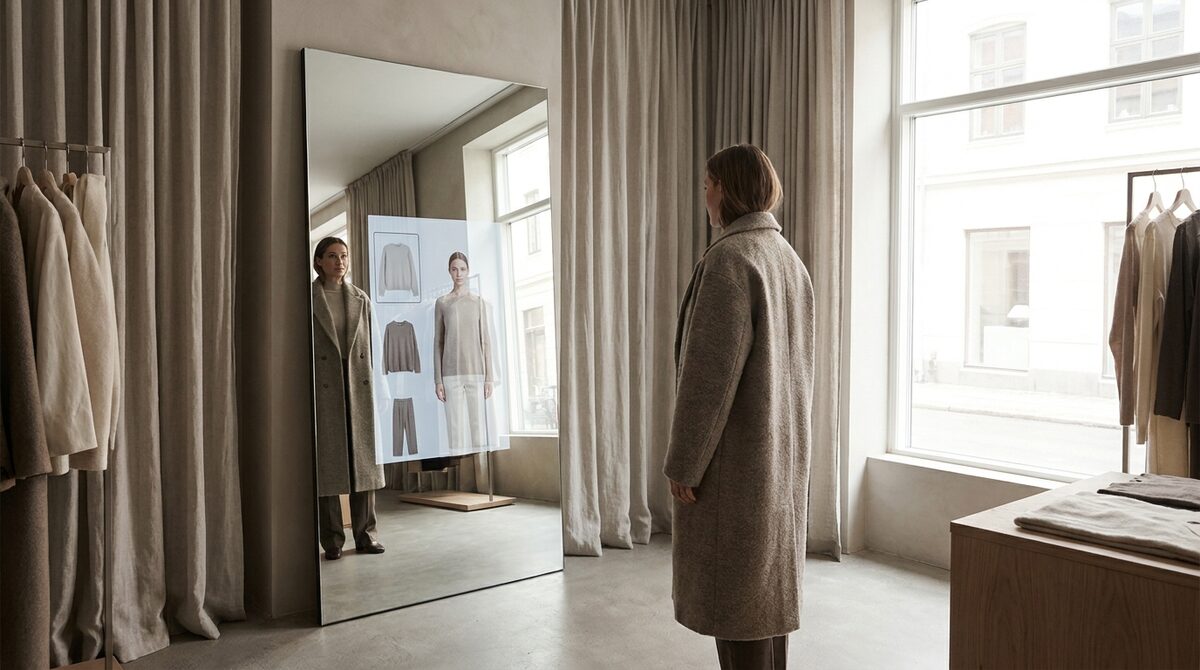
Virtual dressing room technology renders a garment onto a shopper’s own photo with AI, from your existing product images. With 1Match that technology powers a growth engine — each render captures a first-party lead, feeds funnel analytics, and runs zero-storage / GDPR-safe so photos are never retained. The result is fewer returns and more confident carts.
What virtual dressing room technology is
Virtual dressing room technology is the invisible engineering behind a simple experience: a shopper uploads a photo and sees a garment on their own body. Under the surface it combines body detection with generative image rendering, mapping clothing from your existing product photos with correct draping — no 3D avatar, no reshoot. The shopper just sees a convincing result.
How the technology works, layer by layer
First the system finds the body in the photo. Then it maps the chosen garment onto it, matching fit, folds and proportion with strong image quality. It all happens in the browser in seconds. For a plain-language version, our AI clothes changer explainer walks through the same pipeline.
Why the technology reduces returns
The payoff of virtual dressing room technology is fewer wrong purchases. About 70% of apparel returns come from fit and size, and seeing a garment on your real frame resolves most of that before checkout. Stores adding try-on commonly report 25–40% fewer returns; the numbers are in our ROI breakdown.
One engine, many categories
The same technology is fashion-first but not clothing-only. It handles hands, face and body — rings on hands, glasses on faces, hats on heads — so a single engine covers your full catalog rather than just tops and dresses.
Technology that becomes a growth engine
The most valuable output of virtual dressing room technology is data. Every render can capture a first-party lead and feed funnel analytics, so the technology powers a growth engine, not just a preview. And with zero-storage processing, none of that comes at the cost of shopper privacy.
Bottom line: Virtual dressing room technology is quietly sophisticated, but its business value is simple — a Shopify growth engine that pairs realistic try-on with native lead capture and funnel analytics, all zero-storage and GDPR-safe. Put it to work in about ten minutes with 1Match.
Frequently asked questions
What is virtual dressing room technology?
Virtual dressing room technology is the AI and imaging that renders a garment onto a shopper’s own photo so they can preview it before buying. It detects the body, maps the clothing with realistic draping, and returns a photorealistic result — all from existing product images, with no 3D modelling.
How does virtual dressing room technology work?
It combines body detection with generative image models. The system locates the shopper’s body in their photo, then maps the selected garment onto it with correct fit and draping using your product photos. The whole process runs in seconds in the browser, needing no reshoot or headset.
Is virtual dressing room technology accurate enough to trust?
Yes for style and proportion decisions. The technology renders garments with strong image quality on the shopper’s real frame, which resolves the doubts behind most returns. For exact measurements it is best paired with a good size guide, but the on-body preview is what changes buying behaviour.
Does virtual dressing room technology protect shopper privacy?
It can, when built for it. 1Match uses zero-storage processing, so shopper photos are not retained, keeping stores GDPR-safe. Because photos are sensitive, always confirm a provider’s data-retention approach before deploying any dressing-room technology.
 Install on Shopify