
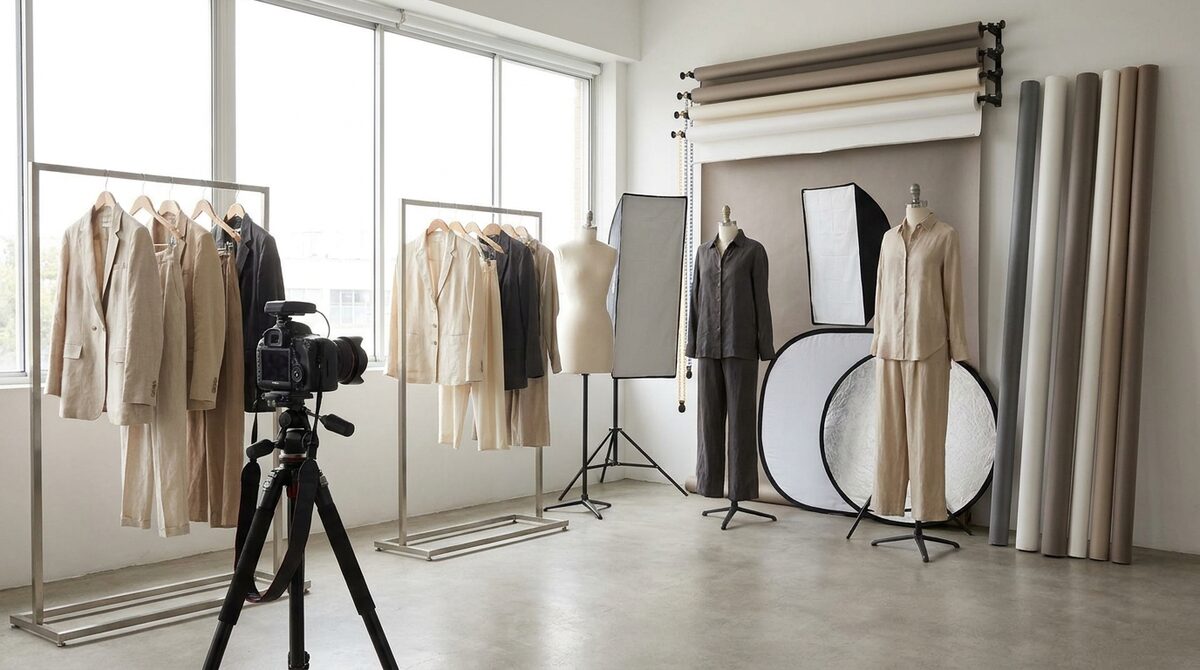
Virtual product photography creates realistic on-model and lifestyle images with software instead of a physical studio — no set, no models, no reshoot. Its most powerful form for fashion is personal: a virtual try-on app like 1Match renders your garments on the shopper's own body, turning virtual imagery into a growth engine that drives add-to-cart, captures first-party leads, feeds funnel analytics, and keeps every photo zero-storage and GDPR-safe.
What virtual product photography means today
The term used to mean 3D-rendered products — build a digital twin of the item, light it, and render frames. That approach is powerful but slow and expensive, requiring a 3D artist per SKU. Modern virtual product photography flips the model: AI generates realistic images directly from your existing 2D product photos, with no 3D pipeline at all. That is the difference between a weeks-long project and a 10-minute setup.
For a fashion store, this unlocks images you could never afford to shoot conventionally: the same jacket on many contexts, accessories rendered on hands and faces, and — most importantly — garments shown on the real shopper.
The two flavors of virtual product photography
1. Scene and model generation
Pros: creates lifestyle and on-model catalog images at scale from a flat photo.
Cons: the model is still generic — not the person buying.
Verdict: excellent for catalog breadth and ad creative.
2. Personalized try-on
Pros: renders the garment on the shopper's own uploaded photo, answering "how does it look on me?"
Cons: requires the shopper to upload a photo (handled instantly and zero-storage).
Verdict: the version that actually moves conversion and returns numbers.
Why no-3D matters
3D virtual photography stalls on cost. Every product needs a modeled asset, and fashion catalogs churn seasonally. Because AI virtual product photography works from existing product photos with no 3D and no reshoot, it keeps pace with your catalog. Strong image quality comes out of the box, and the workflow covers hands, face and body — rings, glasses, hats and clothes — not just flat tops.
| Approach | Setup | Cost per SKU | Personalized |
|---|---|---|---|
| Physical shoot | Days | High | No |
| 3D rendering | Weeks | High | No |
| AI virtual (no 3D) | Minutes | Low | Yes, with try-on |
From virtual image to real decision
A virtual image on a generic model is nice; a virtual image on the shopper is a decision tool. That is the leap from virtual product photography into virtual try-on. Our guide to how an AI clothes changer works explains the rendering, and the virtual fitting room explained covers the shopper journey.
The business case
Around 70% of apparel returns are fit or size related. When shoppers see the item on themselves, guesswork falls: stores using try-on typically report 25–40% fewer returns and 18–28% higher add-to-cart. Virtual product photography makes the imagery cheap; personalized try-on makes it pay. See the full math in our Shopify try-on ROI guide.
Getting started
Start with your top sellers, generate their virtual imagery, and add try-on to the same products so you can measure the lift cleanly. With a 10-minute setup and no 3D, you can validate the whole idea before scaling. That is how virtual product photography becomes a Shopify growth engine: real-body previews, native lead capture, funnel analytics, and zero-storage, GDPR-safe photos. Try it with 1Match.
Frequently asked questions
What is virtual product photography?
Virtual product photography generates realistic product images using software instead of a physical studio shoot. It can place a garment on a virtual model, drop products into lifestyle scenes, or create clean catalog frames from a flat photo. For fashion, the strongest use is showing apparel worn without booking models or sets.
Is virtual product photography the same as 3D rendering?
Not exactly. Classic virtual photography relied on 3D models, which are slow and costly to build. Modern AI-based virtual product photography works directly from existing 2D product photos, skipping 3D entirely, which is why tools like 1Match can set up in minutes rather than weeks.
Does virtual product photography look realistic?
For most catalog and listing use, yes. Current models handle fabric drape, lighting, and body placement convincingly. Very complex prints or reflective materials still benefit from a human review, so brands typically approve outputs before publishing rather than posting them blind.
Can virtual product photography show clothes on the actual customer?
Yes, and that is its most valuable form. Instead of a virtual model, a try-on tool like 1Match renders the garment on the shopper's own uploaded photo. That personalization is what drives conversions and cuts returns, because buyers see the item on their real body before purchase.
 Install on Shopify