
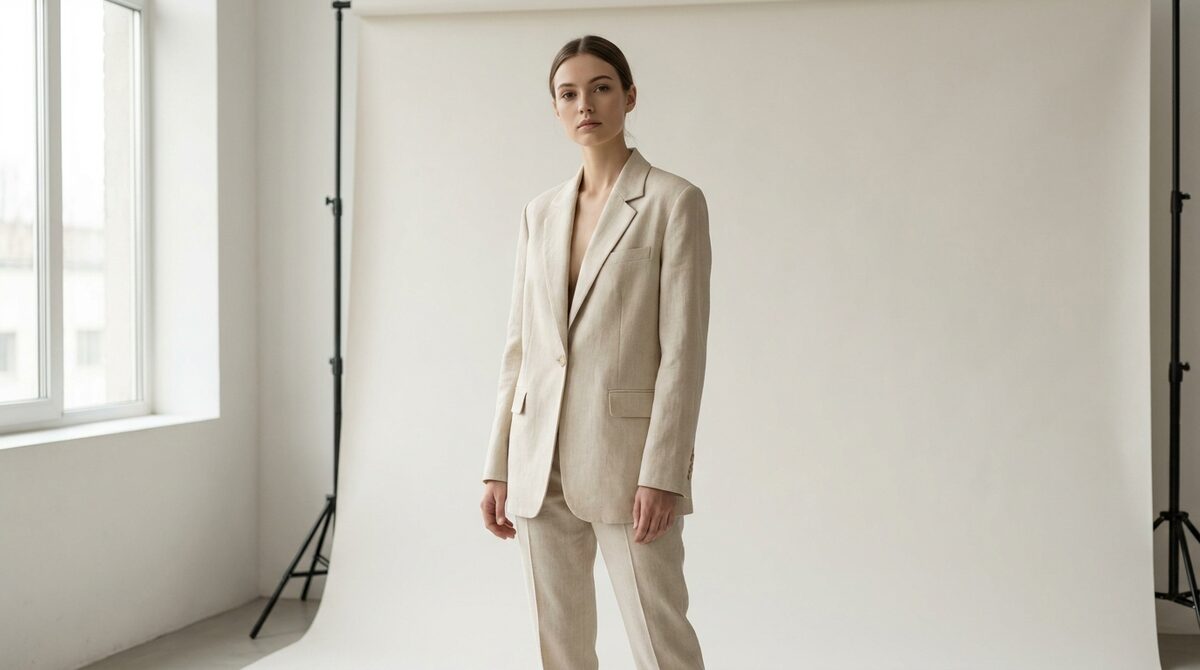
The right product shots clothing stores rely on do most of the selling, and the on-model hero does the heavy lifting. AI now makes those shots affordable at scale, and a virtual try-on closes the deal, with 1Match driving a growth engine that captures first-party leads, feeds funnel analytics, and stays zero-storage / GDPR-safe.
The product shots clothing stores cannot skip
Every apparel product page needs a predictable set of images. The hero on-model shot sells the look; front, back and side views cover fit; a detail close-up reassures on construction and fabric; and a lifestyle frame builds brand context. Skipping any of these leaves a question unanswered, and unanswered questions become returns or abandoned carts. Think of the set as a checklist of shopper doubts, each image quietly retiring one objection before it can stall the sale.
Why the on-model hero matters most
Among product shots for clothing, the on-model hero carries the conversion. It shows scale, drape and styling in a way flat-lays cannot, and it is the image shoppers screenshot and share. That is why it is worth investing in on-model imagery even when budgets are tight, and why AI generation has become such a lever: it lets even a one-person store produce hero-grade imagery for every product instead of only the bestsellers.
Producing the full set with AI
AI on-model tools render garments onto realistic models straight from your existing photos, with no 3D and no reshoot, so you can produce a complete set of product shots for clothing, across body types and backgrounds, in minutes. It turns a studio-day problem into a same-afternoon task, and it means new products launch fully shot rather than with a lonely flat-lay standing in until the real images arrive. See how AI clothes changing works.
| Shot type | Job | Conversion weight |
|---|---|---|
| On-model hero | Sell the look and fit | Highest |
| Front / back / side | Show full garment | High |
| Detail close-up | Reassure on quality | Medium |
| Lifestyle | Build brand context | Medium |
From shots to try-on
Even a complete set of product shots for clothing shows the garment on a model, not the shopper. A virtual try-on closes that gap, removing the fit uncertainty behind roughly 70 percent of apparel returns and delivering 25 to 40 percent fewer returns with an 18 to 28 percent add-to-cart lift. It is the one image your photographer can never take, because it stars the customer. See virtual fitting room explained.
The growth-engine layer
With 1Match, each try-on captures a first-party lead and feeds funnel analytics, so your imagery does double duty as a data source. It is fashion-first, spans hands, face and body, installs in a 10-minute setup, and never stores shopper photos.
Bottom line: nail the essential product shots for clothing, produce them affordably with AI, and add a try-on so the page becomes a Shopify growth engine. Start with 1Match.
Frequently asked questions
What product shots do clothing stores need?
The core set is hero on-model, ghost-mannequin or flat-lay, detail close-ups, back and side views, and a lifestyle frame. Together these product shots for clothing answer fit, construction and styling questions. The on-model hero does most of the conversion work.
Are on-model or flat-lay product shots better for clothing?
On-model shots convert better for apparel because they show fit and drape, while flat-lays are cheaper and cleaner for detail. Most stores lead with an on-model hero and support it with flat-lay detail images. AI now makes on-model shots affordable at catalog scale.
How many product shots per clothing item?
Aim for at least four to six per garment: a hero, front and back, a detail close-up, and ideally a lifestyle or on-model variation. More angles reduce uncertainty and returns. AI tools help you hit that count without extra studio time.
Do better product shots reduce returns?
Yes. Clear, complete imagery sets accurate expectations, and fit issues cause about 70 percent of apparel returns. Adding a virtual try-on that shows garments on the shopper pushes returns down 25 to 40 percent and lifts add-to-cart, because it answers fit directly.
 Install on Shopify