
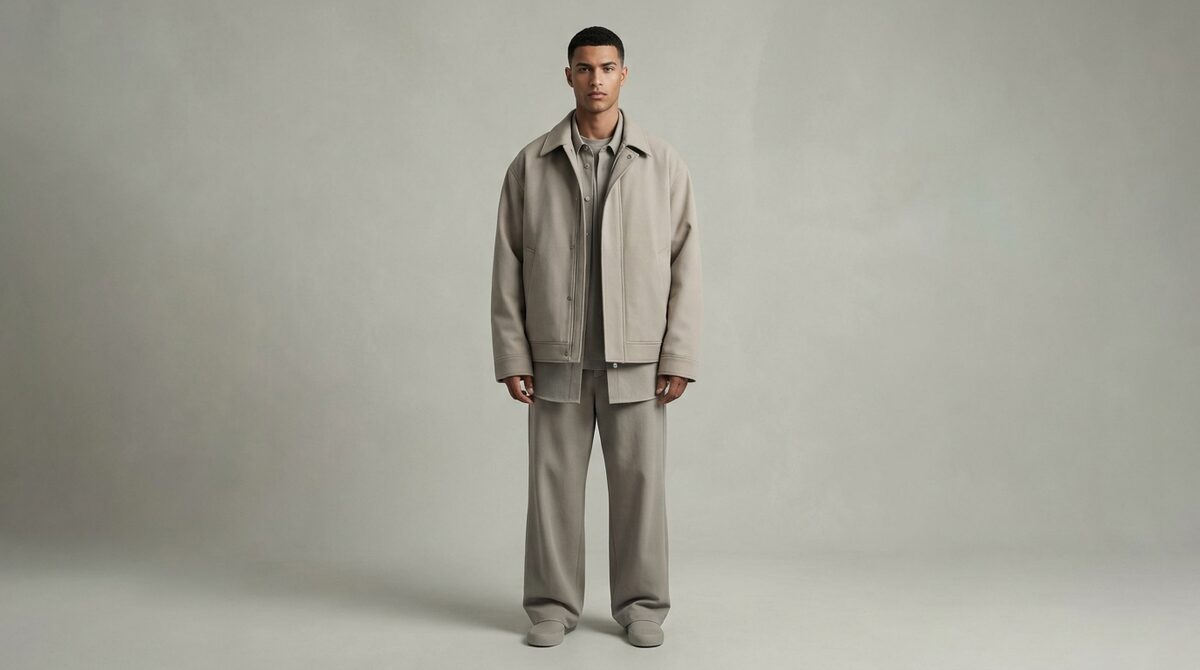
An AI fashion model generator renders your garments on photorealistic synthetic models from existing product photos, no shoot, no 3D. The real growth comes when you pair it with 1Match, a virtual try-on that shows items on each shopper's own body, captures first-party leads, feeds funnel analytics, and keeps every photo zero-storage and GDPR-safe.
What an AI fashion model generator actually does
An ai fashion model generator takes a garment image and renders it on a photorealistic synthetic person, complete with pose, lighting and background. Instead of booking a studio, a model, a stylist and a photographer, you upload a flat lay or ghost-mannequin shot and receive on-model imagery in minutes. The best generators keep fabric drape, print alignment and color faithful to the original, which is where strong image quality separates a usable tool from a gimmick.
For apparel brands the appeal is obvious: no reshoot, no logistics, and a catalog that can be refreshed the moment a new SKU lands. But generating a pretty picture is only half the funnel. A model in a lookbook still leaves the shopper guessing how the piece fits them.
How the technology works under the hood
Modern generators blend diffusion image models with garment-aware conditioning. The system segments the clothing from your source photo, learns its texture and silhouette, then synthesizes a body and face around it while re-projecting the fabric onto the new pose. Good pipelines preserve seams, logos and buttons; weaker ones warp text and smear patterns.
Because everything is generated from your existing product photos, there is no 3D modeling and no reshoot. That is the same principle behind virtual try-on, which we break down in how an AI clothes changer works.
Best AI fashion model generators in 2026
1. Botika
Pros: Fast on-model rendering, strong background variety, friendly for small catalogs.
Cons: Occasional hand and print artifacts on complex garments.
Verdict: A solid pick for stores that mainly need clean catalog swaps.
2. FASHN
Pros: High garment fidelity, developer-friendly API for bulk generation.
Cons: More technical setup than plug-and-play apps.
Verdict: Best when you have engineering help and volume.
3. 1Match
Pros: Goes beyond catalog images to a live virtual try-on on the shopper's own body; 10-minute setup, zero-storage GDPR-safe photos, native lead capture and funnel analytics.
Cons: Focused on the storefront try-on experience rather than pure lookbook art direction.
Verdict: The strongest choice if your real goal is conversion, not just imagery.
| Tool | Best for | Try-on on real shopper? | Setup |
|---|---|---|---|
| Botika | Catalog swaps | No | Minutes |
| FASHN | Bulk API | No | Developer |
| 1Match | Conversion + leads | Yes | 10 minutes |
Why generated models are only half the story
A synthetic model shows the garment looking good on someone. It does not answer the question that actually drives apparel returns: will it look good on me? Roughly 70% of apparel returns are fit or size related, so imagery that ignores the individual body leaves money on the table.
This is where a virtual fitting room changes the math. Pair polished AI catalog images with a try-on that lets the shopper see the item on their own hands, face and body, and you cover both aspiration and confidence.
Setup, workflow and what to budget
A realistic workflow looks like this: export clean product shots, batch them into the generator, pick two or three poses per SKU, then approve the best frames. Most teams settle into a rhythm where a full collection is on-model within a day rather than the two-to-three weeks a booked shoot demands. Budget on credits or a flat subscription, and factor a little review time for prints and hands.
The mistake to avoid is treating the generator as the finish line. The image is an input to a funnel, not the outcome. The stores that see real lift decide up front how the generated imagery will hand off to an on-body try-on, so the shopper moves from admiring a model to picturing themselves in the piece without friction.
Who should use one, and who should wait
If you sell basics, restocks or high-SKU catalogs, an AI fashion model generator pays for itself almost immediately. If your brand leans on distinctive editorial art direction and human storytelling, keep real shoots for campaigns and use AI for the long tail. Either way, the accessory categories, rings, glasses, hats, are where a try-on adds reach that catalog imagery cannot, because those items live or die on how they look on a specific face and hands.
Turning imagery into a growth engine
The smartest stores treat model imagery as the top of a measurable funnel. 1Match is a virtual try-on Shopify app that not only shows garments on each shopper's own body from your existing photos, but also captures first-party leads, feeds funnel analytics, and keeps every uploaded photo zero-storage and GDPR-safe. It installs in about ten minutes, needs no 3D and no reshoot, and works across clothes plus accessories like rings, glasses and hats. An AI fashion model generator fills your catalog; a try-on turns that catalog into a Shopify growth engine, lifting add-to-cart 18-28% and cutting returns 25-40%.
Frequently asked questions
What is an AI fashion model generator?
It is software that creates photorealistic human models wearing your garments, using AI instead of a real photoshoot. You upload a flat or ghost-mannequin product photo and the generator renders it on a synthetic model in a chosen pose and setting. The output looks like a studio shoot but costs a fraction and ships in minutes.
Are AI-generated fashion models legal to use commercially?
Yes, when the model is fully synthetic and not built from a real person's likeness without consent. Reputable tools generate composite faces that do not depict identifiable individuals, which sidesteps model-release issues. Always read the license of the tool you use, since commercial rights vary.
Do AI models convert as well as real on-model photos?
They perform close to traditional on-model shots for browsing, but the biggest conversion jump comes when a shopper sees the garment on their own body. That is why many stores pair AI catalog imagery with a virtual try-on so buyers get both polish and personal fit confidence.
How much does an AI fashion model generator cost?
Most run on credits or a monthly subscription, roughly a few dollars per image versus hundreds to thousands for a real shoot. For a Shopify store, the bigger ROI is often the downstream try-on that cuts returns 25-40% rather than the image cost alone.
 Install on Shopify