
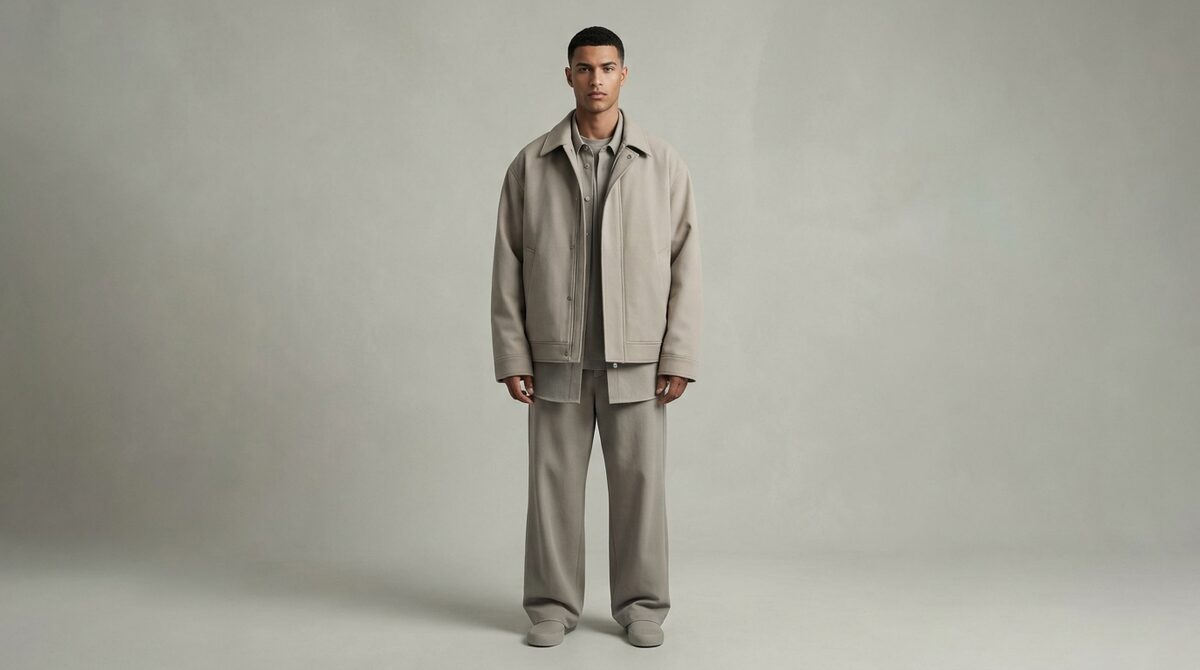
Clothing brand models can be real or AI-generated, but neither shows the garment on the actual shopper. 1Match closes that gap: a virtual try-on that renders items on the shopper's own body, turns browsers into first-party leads, feeds funnel analytics, and keeps every photo zero-storage and GDPR-safe.
The two kinds of clothing brand models today
Clothing brand models now come in two forms: real people shot in a studio, and AI-generated figures rendered from your product photos. Real shoots deliver editorial polish and authentic movement; AI delivers speed, low cost and infinite variations with no reshoot and no 3D. Understanding when to use each is the modern brand's advantage.
Cost and speed: AI wins clearly
A real shoot ties up a model, studio, stylist and photographer, and every restock or color variant can mean another session. AI renders on-model imagery from existing product photos in minutes at a few dollars an image. For the long tail of SKUs, the math is not close.
| Factor | Real models | AI models | Virtual try-on |
|---|---|---|---|
| Cost per image | High | Low | Included in app |
| Speed | Days | Minutes | Instant |
| Shows garment on shopper | No | No | Yes |
| Captures leads | No | No | Yes |
Polish and trust: real models still matter
Real photography keeps an editorial, human quality that campaigns rely on, and some audiences value authentic imagery. That is why the smart pattern is hybrid: real models for hero moments, AI models for the everyday catalog. See how this fits a wider clothing-store toolkit.
The conversion truth both miss
Here is what neither real nor AI models solve: fit. Roughly 70% of apparel returns are fit or size related, and a model, however beautiful, is not the shopper. The garment on a stranger cannot answer how it will look on the person deciding whether to buy.
This is why reducing fashion returns depends less on your models and more on giving shoppers a personal preview. On-body try-on puts the garment on the buyer, not a proxy.
Why try-on out-converts both
A virtual try-on renders the item on the shopper's own body, hands, face and accessories included, using the same product photos you already have. It replaces guesswork with confidence, which is why it moves add-to-cart and returns far more than swapping one model type for another. It also captures data your models never could.
How to decide your model mix
A simple rule works for most brands: real models for a handful of hero campaigns each season, AI models for the everyday catalog, and virtual try-on across the whole store. This keeps human storytelling where customers feel it, cuts cost on the long tail, and gives every product page a personal fit preview.
Whichever mix you choose, measure it. Track how each imagery type affects add-to-cart and returns, and you will usually find that the try-on layer, not the choice between real and AI models, is what actually moves the numbers.
The hidden cost neither model type shows
Every returned parcel carries costs a product page never displays: reverse shipping, restocking labor, quality inspection, and the margin lost on items that come back unsellable. Because fit and size drive most apparel returns, and because no model, real or AI, is the shopper, imagery alone cannot dent that cost. It is a structural limit of showing garments on a proxy body.
This is the case for measuring conversion, not just admiring photos. A store can invest heavily in beautiful models and still bleed margin to returns. The lever that moves the hidden cost is letting the shopper preview the garment on their own body, which is precisely what a virtual try-on adds on top of whatever clothing brand models you choose.
Framed that way, the model debate becomes secondary. Real versus AI is a question of cost and polish; try-on is a question of whether the shopper buys and keeps the item. The brands that grow fastest optimize the second question first.
The clothing brand growth stack
The winning setup is simple: real models for campaigns, AI models for catalog volume, and 1Match for conversion. As a virtual try-on Shopify app, it shows garments on each shopper's own body from your existing photos, captures first-party leads, feeds funnel analytics, and keeps every photo zero-storage and GDPR-safe. Fashion-first, 10-minute setup, no reshoot, it lifts add-to-cart 18-28% and cuts returns 25-40%. Install 1Match to turn your clothing brand models into a real growth engine.
Frequently asked questions
Should a clothing brand use real or AI models?
Most brands now mix both: real models for hero campaigns and AI models for basics, restocks and variants. AI cuts cost and speeds up catalogs, while real shoots keep a premium editorial feel where it counts.
Do clothing brand models actually affect conversion?
On-model imagery helps shoppers visualize a garment and outperforms flat lays, but the biggest conversion lift comes when the shopper sees the item on their own body. Models set the aspiration; try-on delivers personal fit confidence.
How much do clothing brand models cost?
A traditional shoot with a model, studio and crew can cost hundreds to thousands per session. AI-generated models cost a few dollars per image or a flat subscription, which is why brands increasingly reserve real shoots for campaigns only.
What reduces returns more, better models or try-on?
Try-on. Returns are mostly about fit and size, which no model, real or AI, can resolve for an individual shopper. A virtual try-on on the shopper's own body addresses the actual cause of returns.
 Install on Shopify