
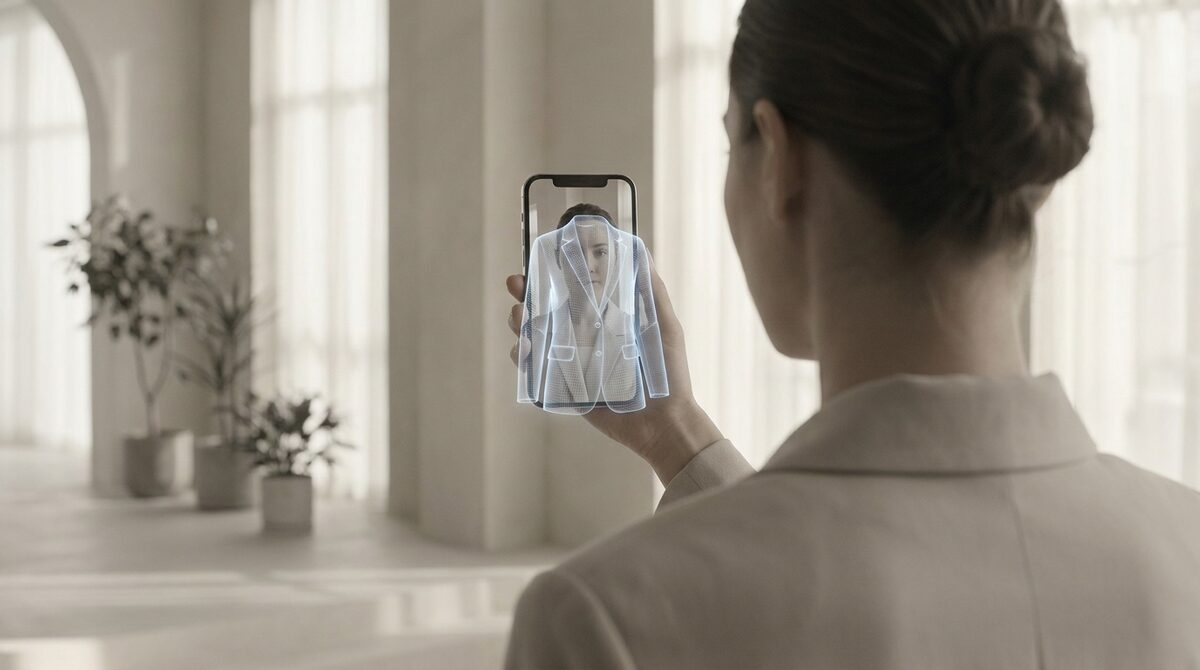
Fashion AR filters place clothing and accessories onto a real person through the camera or a photo. The versions that convert do more than entertain: with 1Match, each try-on powers a growth engine — it captures a first-party lead, feeds funnel analytics, and stays zero-storage / GDPR-safe so no shopper photo is kept. That is the line between a novelty and a sales tool.
Fashion AR filters: novelty vs. commerce
Most people first meet fashion AR filters on social platforms, where a tap drops sunglasses or a jacket onto your face for a laugh. Those are built for reach, not for buying. Commerce-grade fashion AR filters have a different job: they must be accurate enough that a shopper trusts the preview and clicks buy. The gap between the two is image quality — a sticker that slides around does not sell, but a photo-real render does. Hats are the awkward category here; our guide to trying on hats virtually explains what makes a render convincing.
How a fashion AR filter works
The flow is simple from the shopper’s side. They open the camera or upload a photo, the system detects the relevant region — face, hands or body — and the garment is mapped on with correct proportion and drape. The result returns in seconds. Because the best tools work from your existing product photos, there is no 3D and no reshoot. If you want the mechanics in depth, see how an AI clothes changer works.
Beyond clothes: hands, face and body
A strong fashion AR filter is not limited to tops and dresses. The same engine can place glasses on a face, a hat on a head, or a ring on a hand, which means hands, face and body are all covered by one tool. For a store selling apparel plus accessories, that consistency keeps the experience clean and the setup light.
Turning filters into revenue
Delight is nice; measurable lift is better. Expect roughly 25–40% fewer returns and an 18–28% add-to-cart increase, because shoppers stop second-guessing fit. The bigger prize sits in the data layer: every try-on can capture a first-party lead and feed funnel analytics so you see which products win and where hesitation happens. For a wider view, read the complete guide to virtual try-on for a fashion store and our best virtual try-on apps for Shopify in 2026.
Adding a fashion AR filter to your store
You do not need a developer or a photo shoot. Install 1Match, connect your existing product images, and switch on the try-on button — a 10-minute setup. From there every product page offers a fashion AR filter with no ongoing effort.
Common mistakes when adding fashion AR filters
The first mistake is chasing novelty over accuracy — a filter that warps a garment across the shoulders looks fun in a demo but erodes trust at checkout. The second is treating the feature as decoration and never wiring it to your data, so you learn nothing about which products shoppers preview and abandon. The third is ignoring privacy: any camera-based feature that quietly stores images invites both distrust and compliance risk.
Avoiding these is straightforward. Choose a tool that prioritises strong image quality, connect it to funnel analytics so every preview is measurable, and insist on zero-storage / GDPR-safe handling. Do that and a fashion AR filter stops being a gimmick and starts behaving like a dependable part of your storefront that shoppers actually use to decide.
Who benefits most from fashion AR filters
Apparel and accessory stores gain the most, because appearance on the body drives the purchase. A shopper deciding between two jackets, or unsure whether a hat suits their face, is exactly the person a good filter converts. Stores with a wide catalogue benefit further, since one AI engine covers many categories without per-item production.
The quick takeaway on fashion AR filters
Not every filter is built to sell, and the difference is measurable. A social filter earns attention; a commerce-grade filter earns orders by rendering a garment believably onto the shopper and standing behind that preview with data and privacy guarantees. Judge any option on realism, measurability and zero-storage / GDPR-safe handling before you judge it on flash.
Framed that way, a fashion AR filter becomes an easy yes: a low-effort, high-trust feature that answers the shopper’s real question at the exact moment they are deciding whether to buy.
Bottom line: a fashion AR filter is only worth adding if it moves the sale. Run it as a Shopify growth engine — try-on that also delivers native lead capture and funnel analytics while staying zero-storage and GDPR-safe — and you turn a fun effect into a conversion tool with 1Match.
Frequently asked questions
What are fashion AR filters?
Fashion AR filters are augmented-reality overlays that place clothing or accessories onto a person through a camera or photo. Social filters are built for fun and sharing, while commerce-grade fashion AR filters aim to show a realistic, buyable preview. The best ones render garments onto the shopper’s own body so they can judge fit and style before buying.
Do fashion AR filters actually increase sales?
Yes, when they are accurate. A believable preview removes the “will it suit me?” doubt that stalls checkout, typically lifting add-to-cart 18–28% and cutting returns 25–40%. Purely decorative filters entertain but rarely move revenue, which is why merchants favour try-on that produces a photo-real result.
Are fashion AR filters hard to set up on Shopify?
Not with an AI-based tool. Instead of building 3D assets, modern try-on works directly from your existing product images, so there is no reshoot and no modelling. With 1Match the button goes live in about ten minutes and every product page can offer a try-on.
Are shopper photos kept when using AR filters?
They should not be. 1Match runs zero-storage and GDPR-safe, so the photo is used to render the preview and is not retained. Always confirm a provider’s data policy before adding any camera-based feature to your store.
 Install on Shopify