What a formal attire editor does
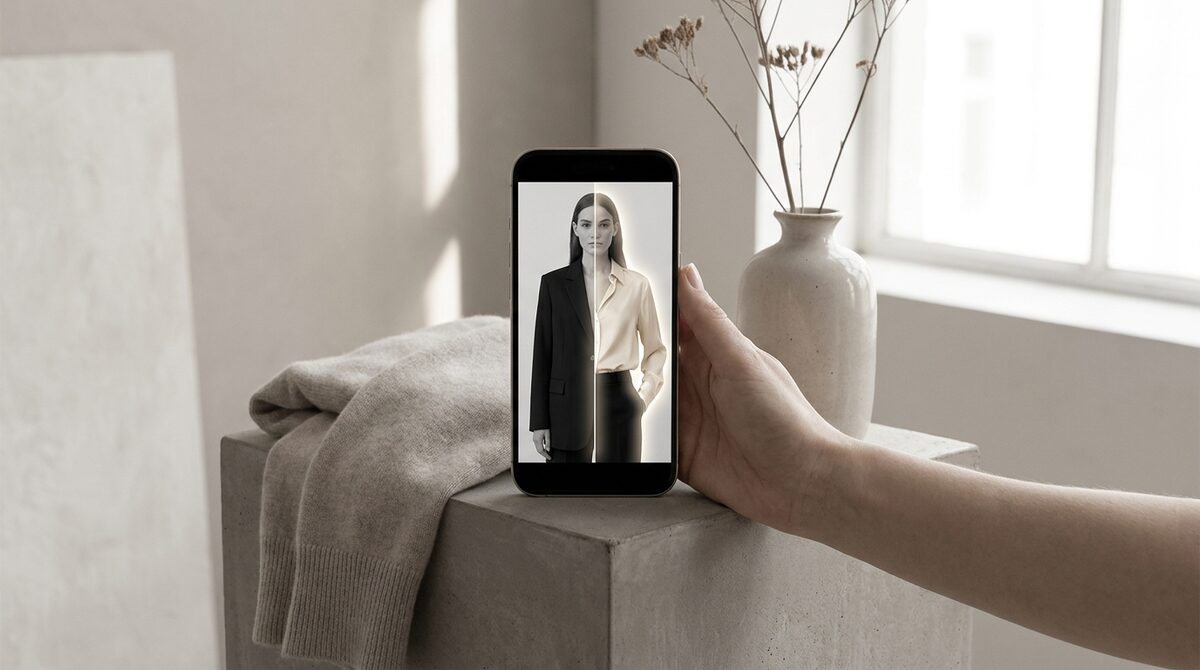
A formal attire editor takes a photo of a person and renders formalwear onto them — a tailored suit, a tuxedo, an evening gown. Good ones respect the body's pose and the scene's lighting, so the garment drapes and falls naturally instead of looking pasted on. Many also let you swap the garment's color.
Why formalwear is the perfect try-on category
Formalwear is expensive, occasion-driven, and highly fit-sensitive — exactly where buyers hesitate most. Seeing a gown or suit on yourself before committing removes enormous uncertainty. That is why occasionwear brands see some of the strongest results from try-on: the stakes, and the reassurance, are both high.
Formal attire editors compared
1. Consumer AI editors
Pros: Fun, fast, free tiers. Cons: Inconsistent realism. Verdict: Great for social, not for selling.
2. Design-studio tools
Pros: High control for lookbooks. Cons: Slow and skill-heavy. Verdict: For hero campaign shots.
3. Shopify virtual try-on
Pros: Photoreal formalwear on the shopper, 10-minute setup. Cons: Merchant-focused. Verdict: The revenue-driving choice.
| Editor | Realism | Best for |
|---|---|---|
| Consumer | Variable | Social edits |
| Design studio | High | Campaigns |
| Try-on | Photoreal on shopper | Conversions |
Color and detail matter in formalwear
Occasion buyers agonize over shade — is the gown truly emerald, is the suit navy or midnight? A try-on that also changes garment color lets them settle these questions on their own body. And because a good try-on covers hands, face and body, it extends to the accessories that complete a formal look: cufflink-adjacent details, glasses and hats. Our complete try-on guide explains the full experience.
Protecting high-value margins
A returned gown or suit is a costly reversal. With fit and expectation causing roughly 70% of apparel returns, formalwear stores have the most to gain from pre-purchase confidence. Try-on stores report 25–40% fewer returns and an 18–28% add-to-cart lift. For the ROI math, see our try-on ROI breakdown.
For occasionwear, the stakes and the rewards are both unusually high, which is exactly why a formal attire editor that becomes a real, body-aware try-on pays off so well. Give the shopper certainty about fit, colour and the complete look, and you turn the most hesitant category in fashion into one of the most confident.
Detail and drape make or break formalwear
Formalwear is unforgiving of sloppy rendering. A suit lives or dies on its lapel line and shoulder; a gown on its drape and how the hem falls. A formal attire editor that becomes a real try-on has to honour those details on the shopper's actual body, or the illusion collapses. When it holds, the shopper sees themselves genuinely dressed for the occasion — and that is worth far more than a flat product shot.
Because these are considered, high-value purchases, the reassurance compounds. A confident buyer not only completes the sale but often adds the pieces that finish the look, and returns less because expectation and reality already matched on screen. For occasionwear, that pre-purchase certainty is the whole game.
Occasionwear is where try-on earns the most
Formalwear concentrates every reason a shopper hesitates: high price, a specific event, an unforgiving fit, and colours that must photograph well under evening light. That is precisely why a formal attire editor that becomes a real try-on pays off so strongly here. A shopper deciding between a midnight-blue and a charcoal suit for a wedding is making a high-stakes call, and seeing both on their own body removes the fear that stops the purchase.
There is also an upsell dimension. Formal looks are built from parts — the suit, the shirt, the tie, the pocket detail, the eyewear. A try-on that spans hands, face and body lets a shopper assemble the whole ensemble and see it cohere, which naturally lifts average order value. Instead of buying one item and guessing at the rest, they buy a complete, confident look.
A formal attire editor is a striking way to visualize a look. On Shopify, the durable advantage is turning formalwear previews into a growth engine. 1Match shows suits and gowns on real shoppers with strong image quality, no 3D and no reshoot, captures native leads, feeds funnel analytics, and never stores a photo.
Frequently asked questions
What is a formal attire editor?
A formal attire editor is an AI tool that dresses a person in a photo in formalwear — suits, tuxedos, gowns — without a real photoshoot. It maps the garment onto the body while keeping pose and lighting realistic.
Is a formal attire editor realistic enough for a store?
Quality varies. Consumer editors are fine for fun edits, but a store needs photoreal results on the actual shopper. A Shopify virtual try-on delivers that with strong image quality and no reshoot.
Can a formal attire editor change garment color too?
Many can. You can swap a suit from charcoal to navy or a gown from red to emerald, previewing every option before buying — useful for occasionwear where color is a big decision.
How does formalwear try-on reduce returns?
Formalwear is high-value and fit-sensitive, so returns are costly. Letting shoppers see the garment on themselves before buying reduces fit and expectation returns, which account for most apparel returns.
 Install on Shopify