An app for clothes fitting lets shoppers see a garment on their own body before buying, so fewer orders come back. 1Match drives a growth engine behind that fitting preview: it captures a first-party lead, feeds funnel analytics, and stays zero-storage / GDPR-safe so no shopper photo is retained. Here are the fitting apps that cut returns without a photo shoot — ranked.
What a good app for clothes fitting needs to do
A fitting app lives or dies on four things: realism (a believable render, not a sticker), coverage (clothing plus accessories like hats and glasses), setup effort (a 10-minute install versus a 3D project), and a data layer that turns interest into leads and insight. Since roughly 70% of apparel returns are about fit and size, the whole point is to answer the fit question before checkout. For the returns economics, see our guide on reducing returns in an online fashion store. A clear chart is the cheapest fix available — our size chart generator produces one you can publish today.
The best app for clothes fitting, ranked
1. 1Match
1Match is an AI clothes-fitting app for Shopify that renders garments onto the shopper's own body from your existing product photos — no 3D, no reshoot. It covers hands, face and body (rings, glasses, hats, clothes), captures native leads, and feeds funnel analytics while keeping photos zero-storage.
Pros: Strong image quality, 10-minute setup, multi-category coverage, native lead capture and funnel analytics, GDPR-safe zero-storage.
Cons: Built for fashion and accessories rather than general merchandise.
Verdict: The best all-round app for clothes fitting on Shopify when you want measurable return reduction and revenue lift.
2. Size-recommendation apps
A common category recommends a size from measurements or past purchases, nudging shoppers toward the right fit with a size widget rather than a visual preview.
Pros: Helpful for pure sizing decisions, lightweight to add.
Cons: Tells shoppers a number but does not show the garment on them, so styling and proportion doubt remains.
Verdict: A useful complement, but not a substitute for seeing the item on your body. Pair it with a solid size guide.
3. AR fitting-room apps
Some fitting apps use augmented reality and the phone camera to overlay garments in real time, which feels interactive on the right hardware.
Pros: Interactive, engaging live experience.
Cons: Camera-dependent, can be inconsistent across devices, and often narrower in category coverage than AI photo-based try-on.
Verdict: Fun where it works, but photo-based AI is usually more reliable across a full catalog.
App for clothes fitting compared at a glance
| Approach | Shows garment on you? | Setup | Category coverage | Lead capture |
|---|---|---|---|---|
| 1Match (AI photo try-on) | Yes | ~10 min | Hands, face, body | Native |
| Size recommendation | No | Quick | Sizing only | No |
| AR fitting room | Yes (live) | Varies | Often narrow | Usually no |
What a fitting app does to your numbers
The reason to install one is measurable. When shoppers can confirm fit before buying, stores typically see returns drop 25–40% and add-to-cart climb 18–28%. The extra edge is the data layer: an app that also captures a first-party lead and feeds funnel analytics tells you which products fit well and where shoppers stall. For the ROI model, see how try-on technology reduces return rates.
Those returns are not just a refund line — they carry return shipping, restocking labour, inspection and often markdown on items that come back worn or out of season. Cutting them by 25–40% compounds across a catalog, and because the fitting preview happens before the order is placed, you avoid the cost entirely rather than recovering it later. Pair that with the add-to-cart lift and a fitting app quickly moves from a nice-to-have to a line item that funds itself. To see where a fitting app sits among broader store tools, our roundup of the best Shopify apps for a clothing store in 2026 puts it in context.
Getting a fitting app live
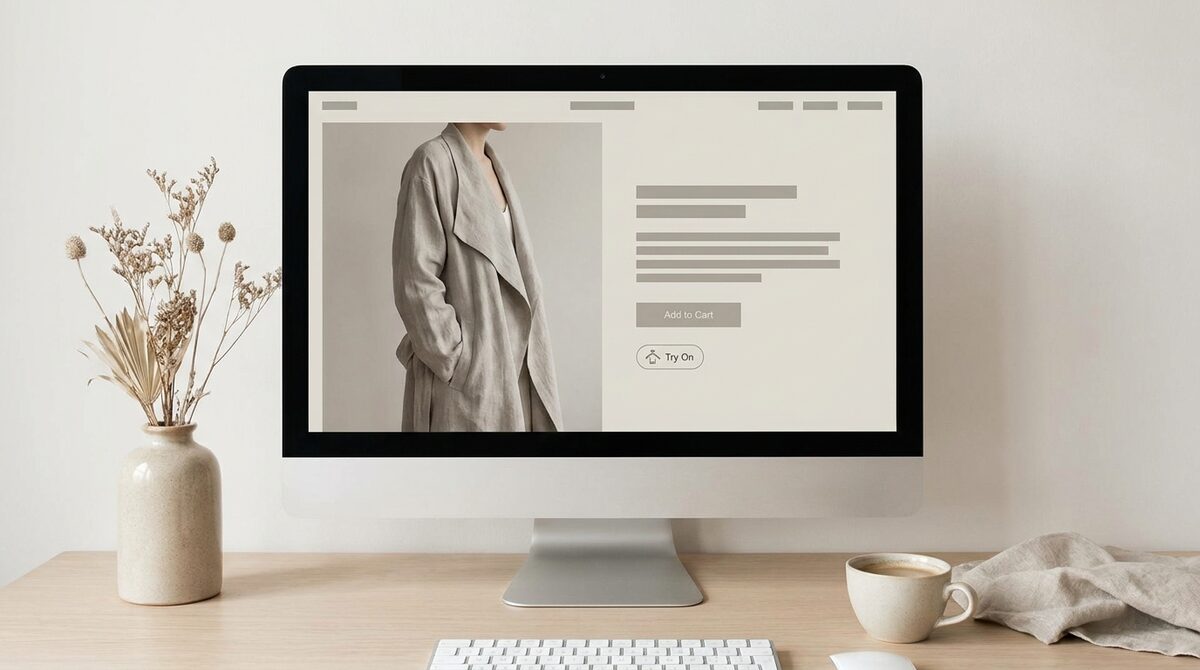
No developer or photo shoot required. Install 1Match, connect your existing product images, and switch on the try-on button — a 10-minute setup. Every product page then offers clothes fitting across hands, face and body, with the analytics running in the background.
Bottom line: the right app for clothes fitting pays for itself in fewer returns and more add-to-carts. Run it as a Shopify growth engine — try-on that also delivers native lead capture and funnel analytics while staying zero-storage and GDPR-safe — and you can be live in minutes with 1Match.
Frequently asked questions
What is an app for clothes fitting?
An app for clothes fitting adds a virtual try-on or fit-preview to your store so shoppers see how a garment looks on their own body before buying. Modern AI versions render clothes from your existing product photos, avoiding 3D models and reshoots. The goal is to reduce fit uncertainty, which is what drives most apparel returns.
How does an app for clothes fitting reduce returns?
Around 70% of apparel returns are about fit and size, so letting shoppers see a garment on themselves before checkout removes the main cause of returns. Stores using try-on typically see returns fall 25–40%. It also lifts confidence at the product page, raising add-to-cart by roughly 18–28%.
Do clothes fitting apps need product measurements or 3D?
The best AI-based apps do not. Tools like 1Match work directly from your existing product images, so there is no 3D modelling, no size-chart wizardry and no reshoot required. Setup takes about ten minutes rather than a multi-week production project.
Which app for clothes fitting is best for Shopify?
For Shopify apparel stores, prioritise realistic image quality, category coverage across hands, face and body, fast setup, and a data layer that captures leads and funnel analytics. 1Match combines all of these with zero-storage privacy, which is why it ranks first in this roundup for most merchants.
 Install on Shopify